
Resource Category: Blog

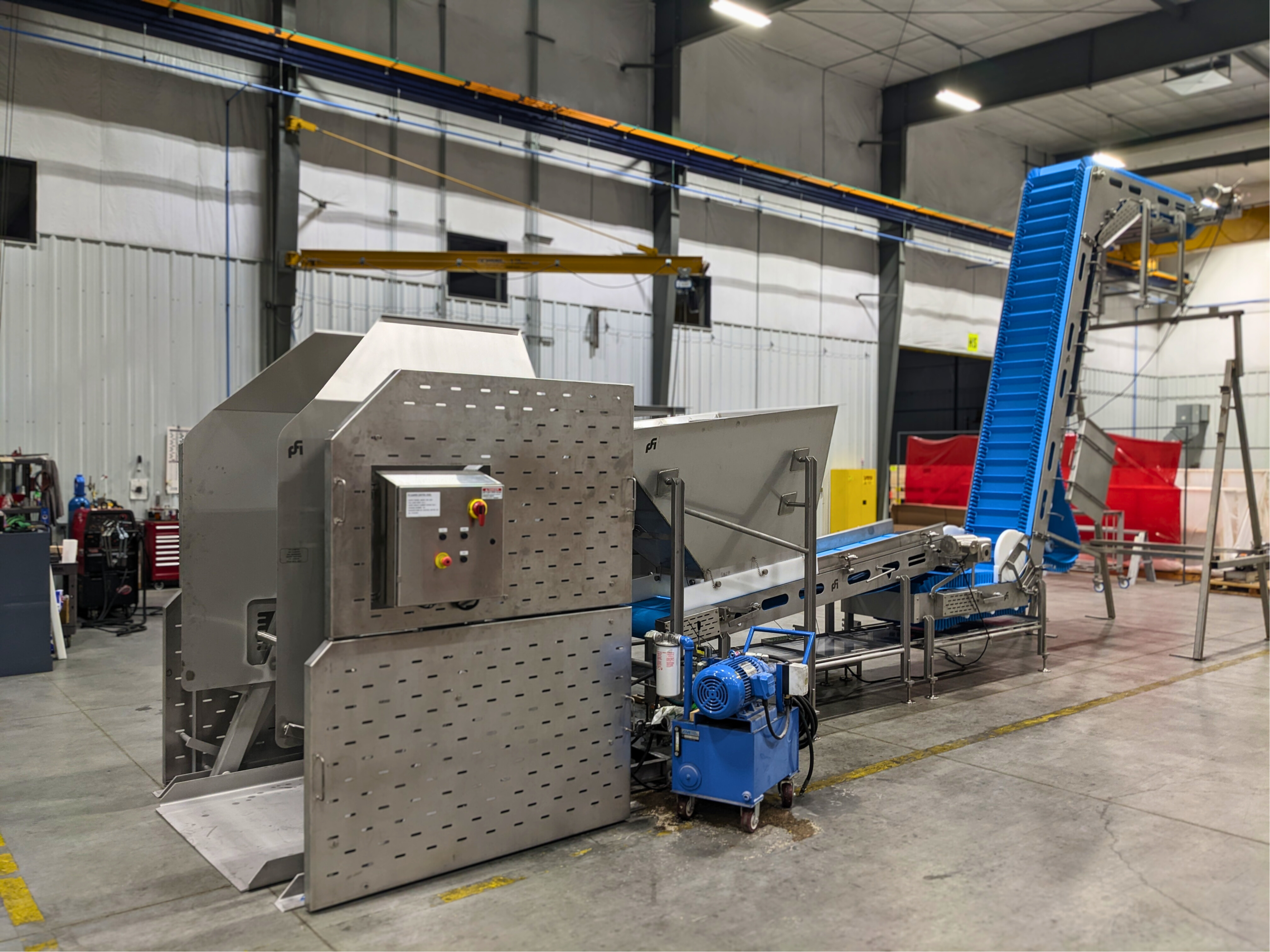
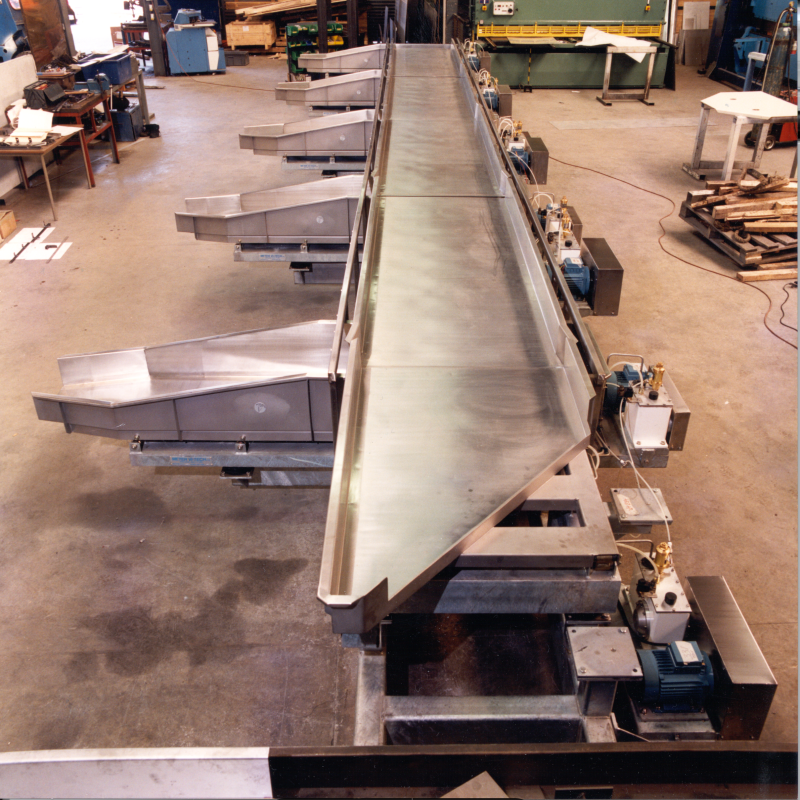
A PFI Conveyors VIBRAFlex II horizontal motion conveyor during installation.

Benefits of Upgrading Your Food Conveyor System

Your conveyor system is the backbone of your food-processing operation, connecting separate OEM equipment on your line into a single seamless system. Upgrading your conveyor system may seem like a big step right now, but it might be unavoidable if you want to keep up.

The food processing industry is changing. Looming tariffs mean ingredient prices are likely to rise, while serious labor shortages persist and food safety standards continue to rise. And, Americans’ eating habits are changing. It all means your existing equipment may no longer be pulling its weight. 

In this blog, we’ll explore the many benefits of upgrading your food conveyor system. We’ll also consider how specific advantages can help you increase efficiency, streamline operations, and reduce costs. 

WHY UPGRADE YOUR CONVEYOR SYSTEM NOW?

You know your food processing system and you know what it is capable of. Why shake things up by upgrading your conveyor system now? Because modern food conveyor systems offer benefits that influence productivity, safety, and profitability. Quality upgraded conveyor equipment lets you:

Increase Efficiency and Performance

Expect more from your equipment. Today’s leading conveyor systems deliver faster line speeds and a choice of conveyor widths and lanes to right-size throughput to your needs. Get more done with value-added conveying that sorts, grades, merges, separates, or reorientates products on the move between processes, all while reducing spillage and waste. Upgraded equipment will have fewer maintenance issues, reducing downtime and increasing the overall production.

Customized solutions to specific challenges are easier and more effective than ever. Work with an experienced supplier to get the precise, tailored solutions you need. It’s no longer a case of what is possible but simply what upgrades are best for your process.

Ensure Food Safety and Compliance

Recent food recalls have highlighted the critical need for equipment that prevents contamination and ensures the safety of consumers. Updated sanitary conveyor systems help combat recalls by minimizing the risk of bacterial growth and cross-contamination, making them essential for maintaining the integrity of your production process. Advanced safety features such as easy-to-clean surfaces, reduced food contact points, and open frame construction let you save time and money on sanitation and ensure consumers are safer than ever.

Regulators are also raising the bar with stricter standards. They demand safer product designs, and industry leaders are stepping up to exceed requirements to protect their customers and their reputations. Make sure your equipment is up to date with the latest HACCP, GMP, and AAMP regulations. You’ll avoid fines and potential plant closures, and, just as importantly, you’ll have full confidence in the quality of every product you ship

Boost Product Quality

Send better stuff out the door with equipment that respects your product’s integrity. Choosing the right equipment for the job rather than an off-the-shelf solution limits product loss, reduces crushing or breakage of delicate foods, and prevents product degradation between processes.

The best equipment features smart modular design, flexible handling options, and customizable alternatives that integrate with OEM machinery and connect perfectly with other pieces of conveying equipment. 

Modern conveyor systems can also utilize automation technologies like vision systems, inspection tools and integrated data analytics to streamline operations and enhance consistency. It all adds up to smarter handling solutions that treat your product right. 

Deliver More Uptime

Repairs, readjustments, failures, retrofits, and even time-consuming maintenance and sanitation procedures on older equipment all cut into production time. Newer, upgraded equipment is designed with fewer moving parts, high-quality components, and streamlined designs that require less frequent maintenance, reducing downtime and ensuring your production line operates more efficiently.

Prioritize Worker Safety

New equipment from leading suppliers puts your people first with both passive and active safety measures, including comprehensive guarding, catwalks, platforms, open-access frames, and emergency stop buttons. Automation and sensors further enhance safety by reducing direct interaction with moving parts, minimizing risks while improving efficiency. These features create a safer, more productive environment and ensure compliance with the latest worker safety standards.

Lower Total Cost of Ownership

What’s the bottom line? Investing in the best available conveying equipment may raise your upfront costs, but more cost-efficient, reliable equipment helps to boost production and productivity. It also helps limit lifetime maintenance and parts costs, not to mention costly unplanned downtime.  

It all adds up to lower total costs of ownership and quicker returns on investment than your existing conveying equipment.
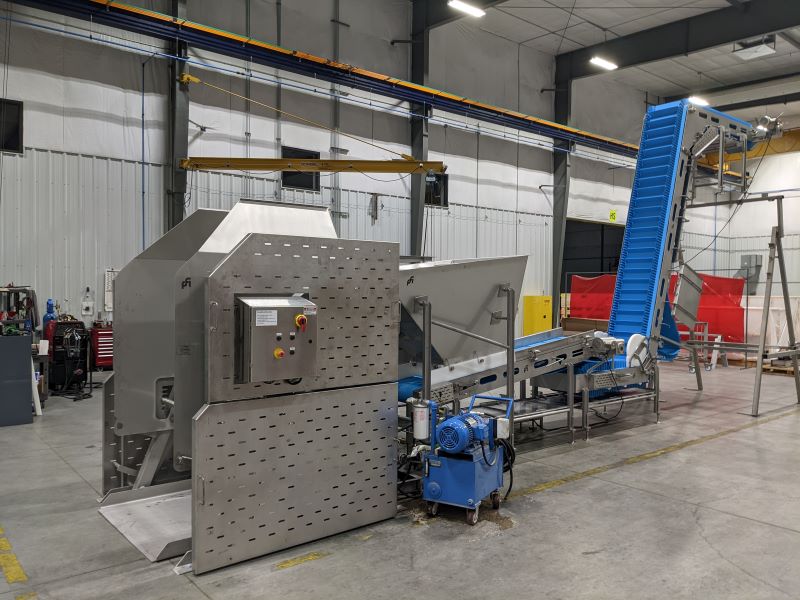
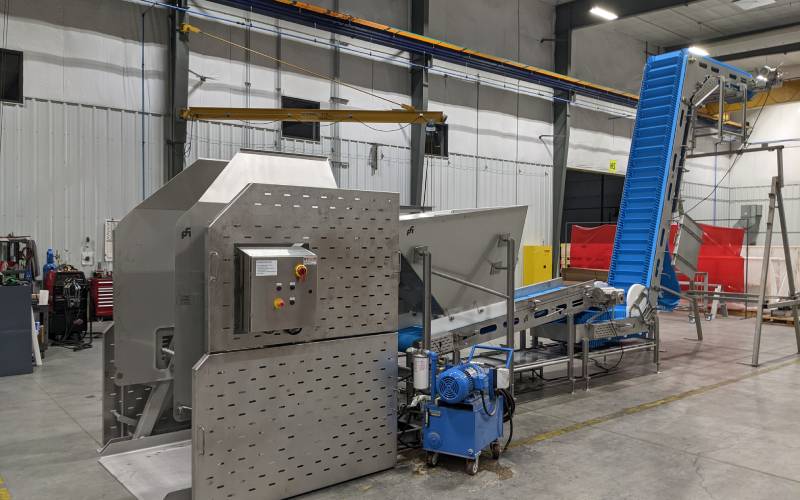
PFI dumper with incline conveyor system.5 INNOVATIONS FOR IMPROVED CONVEYOR PERFORMANCE

So, what sets today’s conveyor systems apart from legacy systems of the past? Here are five areas of innovation that are changing what modern conveyor solutions can do.

1. Design for Sanitation

Modern conveyor systems from PFI are designed from the ground up with sanitation in mind. This includes:

  • End-to-end stainless steel construction
  • Open frame and modular designs allow easy access to all parts of the conveyors
  • Angled surfaces to prevent liquids from accumulating on surfaces
  • Reducing or eliminating seals, joints, and contact points where bacteria can build up
  • Toolless maintenance and parts replacement to prevent scratching or denting

Conveyors can also be built with IP69K-certified parts for the highest sanitation requirements, with tighter tolerances and solid-steel tubular parts capable of withstanding repeated high-temperature washdowns.

Optional features like belt scrapers and other “clean-in-place” technologies work to prevent potentially dangerous food buildup and help to reduce waste.

2. Energy-Efficient Technologies

Many older conveyor systems still rely on hydraulics and belt-driven models to move products from one place to the next. These technologies are being replaced by servos and high-efficiency electric motors that run the conveyor directly without the aid of hydraulics.

This is achieved by rethinking how conveyors move products:

  • Horizontal motion conveyors, pioneered by PFI, use a controlled, energy-efficient in-line “gliding” motion to move a range of foods to where they are needed next. 
  • Vibratory conveyors, vibrate at the right frequency to gently “lift and bump” loose materials to the next processing point.

These technologies also replace less-efficient belt-drive systems for many applications, reducing energy demand, while also making conveyors easier to clean, test, and repair.

3. Better Integration

Integration problems are common with older or mismatched conveyor systems. Connection issues may cause serious production disruptions and, in some cases, may even permanently limit your line’s capacity.

Leading manufacturers are now adopting modular conveyor designs that ease integration to allow seamless connections with both infeed and outfeed equipment. This may include equipment that transfers products to move smoothly from a wide machine to a narrower one or merges and separates multiple lines. 

For ultimate efficiency and seamless integration, consider upgrading to a complete system designed to work together, ensuring every component aligns perfectly to optimize your production process.

4. Increased Automation

Legacy conveyor systems generally require more human oversight and assistance, especially at critical transition points. That’s a problem in an industry with a serious labor shortage. Increased automation helps limit your labor bill and enables you to make better use of the people you have.

Conveyor automation includes real-time monitoring and adjustment of your overall line speed, and better connections that reduce the need for manual handling of foods.

5. Value-Added Conveying

Conveyor systems can be designed to not just transfer products, but also prepare food for the next stage in your production process. Among other actions, this can include: 

Conveyors are now far more than just “passive” transfer devices for moving products from one line station to the next. They can be an active part of your food preparation process. 

UNDERSTANDING CUSTOMIZATION

One of the biggest reasons to consider upgrading your conveyor system is the almost unlimited ability to customize equipment for your specific needs. With advanced manufacturing techniques and control capabilities, it’s now possible to create almost any conveyor setup you can imagine. 

For conveyor manufacturing specialists like PFI, it’s now possible to build equipment with: 

  • Tailored dimensions to match your specific production requirements.
  • Layouts optimized for space, including horizontal, incline, and vertical designs.
  • Floor-, wall- and ceiling-mounted conveyors
  • Food-specific features for handling temperature, texture, and product type
  • Add-ons for value-added processes during transport

TRANSITIONING TO AN UPGRADED SYSTEM

Looking to reap the benefits of upgrading your food conveyor system, including improved throughput, more efficient production, and long-term return on your investment? Here are some tips for getting the most out of your transition.

Work With An Experienced Supplier 

At PFI, we’ve been building some of the world’s best conveying equipment for almost 60 years. We work as much as consultants as manufacturers, taking the time to understand your conveying needs and implementation challenges before starting our design process. 

Test, Test, Test

Choose a supplier with the ability to factory-test your equipment during design and before installation. PFI is equipped to run partial and full-scale factory acceptance tests (FATs) of your equipment to make sure it meets your needs as required.

Installation and Support

Not all conveyor equipment manufacturers install their own equipment. At PFI, we do. Our skilled technicians not only design and build your equipment but help to install and commission it too. And we back it up with full-service parts and post-installation support throughout your equipment’s lifespan.

TRUST PFI FOR CONVEYOR UPGRADES

PFI is a global leader in creating safe and sanitary conveying equipment for the most demanding food processing applications. We’re known for producing high-quality durable equipment that boosts efficiency and throughput, delivering long-term returns on your investment while protecting the quality and integrity of your product.

Ready to embrace the benefits of the world’s best sanitary food conveying equipment? Contact us, or click below to learn more about our flexible, customizable conveying solutions.
Explore Our Food Conveyors

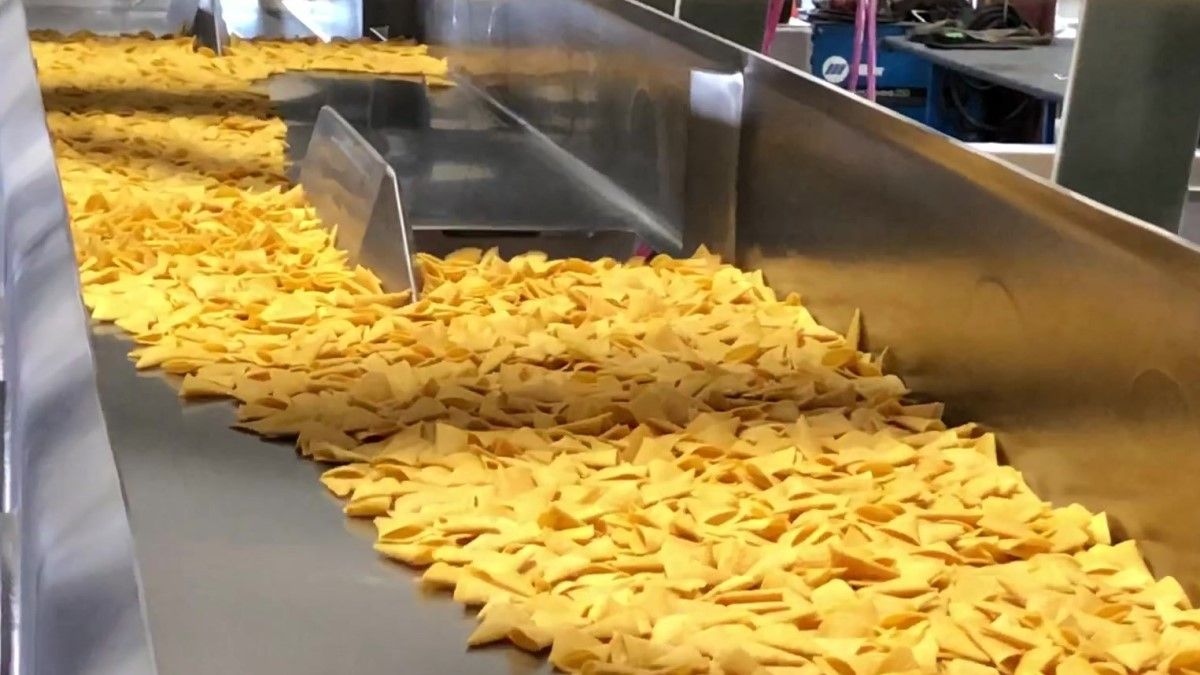
Corn snacks being conveyed on a PFI incline conveyor.

5 Signs It’s Time to Upgrade Your Food Conveyor System

Food processing plants face mounting pressure to increase production while maintaining strict safety standards. Equipment that worked fine years ago now creates daily obstacles and rising maintenance costs. Running an outdated conveyor system puts product quality, food and worker safety, and company growth at serious risk.

Modern conveyor technology offers solutions to these growing challenges. New designs boost production efficiency while simplifying cleaning and maintenance. Read on to learn when to upgrade a food conveyor system.

THE SIGNS OF A FAILING CONVEYOR SYSTEM

Food manufacturers often overlook warnings that their conveyor systems need replacement until major problems emerge. Knowing the main signs of equipment issues enables plant managers to fix problems early. This proactive approach prevents expensive crises from compromising production, food quality, employee safety, and profitability.

1. Frequent Breakdowns & Costly Downtime

Recurring equipment failures do more than just interrupt production – they drain maintenance budgets and strain technical resources. When repair costs start approaching the price of new equipment, especially with rising expenses for obsolete parts, upgrading becomes the smarter financial choice.

Aging components fail more frequently, creating maintenance bottlenecks as technicians spend more time troubleshooting and replacing parts. The lost production often costs more in missed schedules and overtime labor than investing in new equipment would require.

2. Outdated Technology & Inefficiency

Outdated conveyors can slow down your entire production line. These older systems run at slower speeds than modern equipment and lack the smart features needed to adjust their pace based on upstream or downstream conditions.

Even basic efficiency features found in newer conveyors, such as automatic belt tensioning or self-adjusting guides, are absent from older models. This means workers must constantly make manual adjustments to keep products flowing smoothly. When these adjustments fail, products bunch up or spread too far apart, creating waste and reducing throughput.

Fortunately, advancements in conveyor technology offer innovative solutions to these challenges. For example, replacing old belt conveyors with modern vibratory or horizontal motion systems can significantly improve efficiency and sanitation. These newer technologies are designed to handle a wider range of products and adapt to varying production demands with minimal manual intervention.

Additionally, creative repurposing of existing equipment can unlock new efficiencies. For instance, the PURlift, traditionally used for dough handling, can now be adapted for other applications with similar consistencies, such as raw meat or peanut butter. This flexibility not only extends the utility of your equipment but also reduces the need for costly new investments.

3. Noncompliance 

Older conveyor systems present multiple risks that can damage your operations, reputation, and bottom line. Today’s food safety and worker protection standards demand equipment designs that older ones simply weren’t built to deliver. Here’s how outdated conveyors put your operation at risk:

Food Safety & Compliance Issues

Old conveyors are not designed to today’s sanitation and food safety standards. They may be manufactured in mild steel and have inaccessible areas and many moving parts that are difficult to clean and sanitize properly. This allows harmful bacteria to grow and contaminate food products. These contamination risks can trigger costly recalls and harm your brand reputation. Beyond recalls, failing to meet HACCP and GMP regulations can result in steep fines, legal challenges, and potential facility closures.

Worker Safety & Operational Limitations

Outdated conveyors lack essential safety features such as guards and emergency stops, exposing workers to serious injury risks. These older systems also struggle to handle modern production demands, forcing workers to spend more time on manual adjustments and increasing the likelihood of accidents. 

Upgrading your food conveyor system with advanced safety features protects employees, improves productivity, and increases operational efficiency.

Why Modern Standards Matter

The shift from mild and painted steel to stainless steel construction marks a crucial advancement in food safety. Modern stainless designs resist corrosion and prevent bacterial growth, while open frames allow thorough cleaning and inspection. Current sanitary standards now cover entire processing lines, not just specific zones. 

New conveyor technologies, like horizontal motion and vibratory systems, offer better sanitation through inherent design features. These improvements make compliance easier and protect both workers and consumers.

4. Changes in Production Requirements

Older conveyor equipment can’t handle the challenges of increased production. Sales growth and expanding product lines reveal severe limitations in this outdated machinery. Modern manufacturing demands quick changes between products and higher output rates. These aging conveyors fail to deliver on both counts.

The daily struggles impact every part of production. Orders pile up because conveyors run at fixed, outdated speeds. New product sizes require flexible equipment adjustments. Plant managers face tough choices between maintaining quotas or investing in new equipment that meets their current (and future) needs.

5. Increasing Maintenance Expenses

Aging conveyors steadily drain maintenance budgets beyond reasonable costs. Each month brings new repair expenses while replacement parts become harder to source.

Basic components like bearings and belts now fail at an alarming rate on older systems. Many manufacturers no longer make parts for outdated models, so prices keep rising for the few remaining parts. 

The maintenance team logs extra hours every week to handle frequent breakdowns. Emergency repairs pile up extra costs through overnight parts shipping and overtime pay. What started as routine upkeep has evolved into a constant financial strain on operations.

THE RISKS OF USING AN OUTDATED CONVEYOR SYSTEM

Outdated conveyor systems pose serious food safety risks. Hard-to-clean designs harbor bacteria, leading to contamination and costly recalls. Sick consumers and damaged brand reputations often follow. Failing to meet food safety standards can also result in hefty fines, legal fees, and even facility shutdowns.

Worker safety is another critical concern. Missing safety guards and broken emergency stops increase the risk of injuries or fatalities. These incidents lead to worker compensation claims, lawsuits, and higher insurance premiums. A single accident can devastate a company’s reputation and financial stability.

Production limitations from outdated systems can cripple growth. Slow, inefficient conveyors cause delays, missed deadlines, and lost sales. Retail contracts may be canceled, and competitors with modern equipment will seize market share. Over time, these setbacks can force plants to close and businesses to shut down entirely.

BENEFITS OF MODERN SANITARY FOOD CONVEYOR SYSTEMS

A complete food conveyor system and bakery line for pancakes.

Food manufacturers face intense pressure to increase output while maintaining strict safety standards. The latest conveyor technology transforms how plants meet these challenges with the following features and benefits:

Built-in Sanitation Features

Tool-free components make cleaning between production runs faster and easier. The open frame design eliminates hard-to-reach crevices, lowering the risk of contamination. Optional features like Clean In Place (CIP) systems and belt scrapers allow for cleaning during production, reducing downtime and keeping operations running smoothly. 

Minimal Maintenance Needs

Advanced motion technology eliminates most worn parts found in traditional systems. Vibratory conveyors need only annual spring replacements. This reduction in maintenance needs keeps production running smoothly with fewer interruptions.

Precise Product Handling

Adjustable guide rails and controlled product movement work together to prevent waste and damage. Belt-cleaning attachments efficiently remove residue and stop potential issues before they arise. 

Vibratory and horizontal motion systems deliver gentle handling, which is ideal for fragile or coated products. This ensures no loss of yield or breakage during processing. Horizontal motion systems also feature immediate stop/start functionality, maintaining optimal product flow.  

Smart Control Systems

Automated controls now handle tasks that once required constant manual adjustments. Sensors throughout the line communicate to maintain consistent product flow. This intelligent monitoring prevents bottlenecks while reducing operators’ workloads.

Easy System Adaptation

Modern conveyor systems offer unmatched flexibility to scale production up or down as needed. Vibratory pans, for example, can be customized for tasks ranging from basic transport to precise sizing or laning. 

These systems can be adapted to fit any production environment and perform various functions. Plants can expand capacity by adding matching units or upgrading to faster equipment, ensuring seamless growth and adaptability.

CUSTOMER SUCCESS STORY: BAKERY DOUGH RESIDUE SOLUTION

A major bakery faced rising sanitation costs from sticky dough residue on its conveyor lines. Raw dough stuck to belts, and transfer points created contamination risks. The cleanup process required four hours of intensive scrubbing each day.

PFI engineers designed a custom solution with a sanitary dough coffin and incline belt system. The new design featured a tool-less belt scraper for quick cleaning access. Special non-stick surfaces prevented dough from adhering to critical transfer points.

The results transformed the bakery’s production schedule. Daily cleaning time dropped from four hours to less than two. The maintenance team eliminated emergency contamination cleanups. Production uptime increased while sanitation costs decreased.

This success story highlights why modern conveyor design matters. The right equipment turns common industry problems into opportunities for improvement. Features like tool-less cleaning access and non-stick surfaces deliver measurable benefits in safety, efficiency, and cost reduction.

PREPARING FOR THE FUTURE & PARTNERING FOR SUCCESS

Smart planning for equipment upgrades requires a clear view of industry trends. Food safety standards grow stricter each year while production demands increase. Consumer preferences change rapidly, forcing manufacturers to adapt quickly. Meanwhile, automation and data analytics reshape how plants operate and compete.

Proactive Food Safety & Sanitation

Current and upcoming regulations will demand higher sanitation standards from food manufacturers. New conveyor designs anticipate these changes with surfaces that resist bacterial growth. Quick-release components and tool-less cleaning access help plants maintain the strictest hygiene protocols.

Adaptable & Flexible Operations

PFI excels at customizing solutions to ensure seamless integration with minimal disruption. Our rapid lead times enable businesses to adapt to new product demands swiftly. By leveraging our expertise, you can enhance productivity and maintain competitiveness in today’s fast-paced market.

Scalable Automation & Data-Driven Insights

Smart sensors now track every aspect of conveyor performance. Built-in automation controls adjust settings to maintain peak efficiency. This continuous data stream helps plants spot trends and prevent problems before they impact production.

Support and Expertise for Your Upgrade

The path to improved production starts with understanding your specific needs. Our consultative approach focuses on designing systems that match your application requirements, production rates, and available space. This careful planning creates solutions that serve your business today while adapting to tomorrow’s challenges.

Professional installation ensures optimal conveyor performance from day one. PFI’s installation team handles every aspect of setup and testing for reliable long-term operation. Expert technicians verify all components meet specifications while training your staff on proper operation and maintenance procedures. 

Sourcing equipment and support from the same supplier streamlines quoting, accounting, and communication. Our teams’ deep knowledge of our equipment increases the success of your upgrade.

GAIN A COMPETITIVE EDGE WITH MODERN CONVEYOR SOLUTIONS

Investing in modern conveyor equipment protects food safety while boosting production efficiency. Equipment upgrades provide the foundation for sustainable business growth in today’s competitive market. Smart planning for these improvements helps manufacturers stay ahead of changing industry demands.

PFI leads the food manufacturing industry with innovative conveyor solutions backed by decades of expertise. Our engineering team works closely with clients to design systems that exceed safety standards and performance goals. Click below to explore our complete line of sanitary food conveyor solutions.

Explore Our Food Conveyors

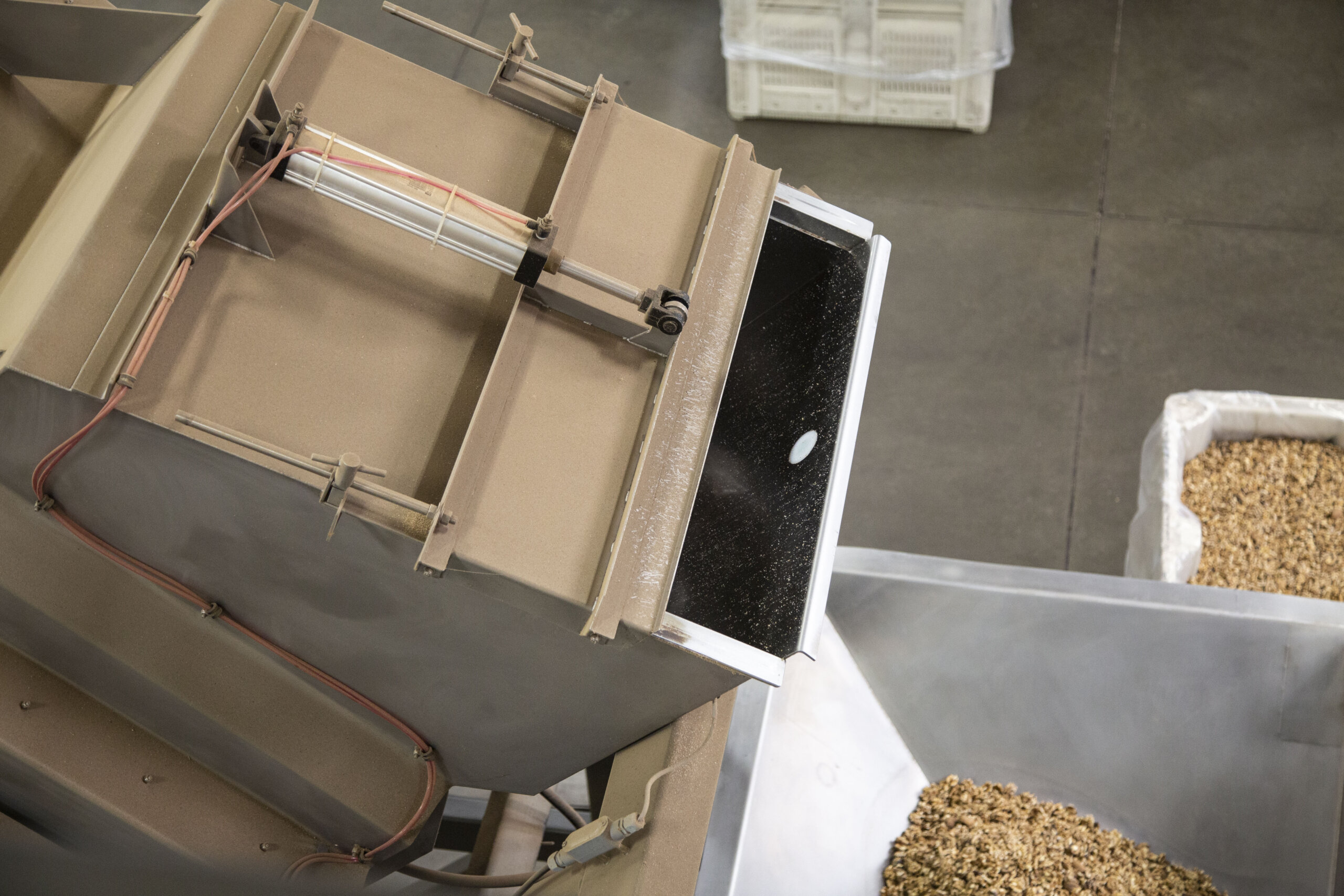
A stainless steel walnut tote dumper from PFI.

Dumper Comparison: Why PFI’s Tote Dumpers Excel

Tote dumpers are critical components in food processing operations. They handle large quantities of products, unloading large totes, crates, vats, and containers onto the line. They play a key role in maintaining efficiency and consistent production. Selecting the right one is crucial to optimizing your processing line. 

However, choosing the most suitable model can be challenging, given the variety of options available and seemingly similar designs. Many of PFI’s competitors manufacture tote dumpers, and they share many similar features with PFI’s tote dumpers. But a supplier’s value goes beyond just initial specs. 

Read on to learn more about PFI tote dumpers vs. other dumpers and discover what sets us apart in the industry.

WHAT ARE DUMPERS AND HOW DO THEY WORK? 

Dumpers maintain a steady production flow by handling large volumes of product quickly and consistently, improving overall operational efficiency.

They use hydraulic systems to lift and tilt containers to a specific angle, then empty the contents into processing lines or conveyors. They are often located in the receiving or early processing stages of production.

They minimize manual labor requirements and integrate safety features such as interlocks and guards to protect operators from potential hazards. 

PFI TOTE DUMPERS 

PFI offers tote dumpers that stand out for their unique design and comprehensive benefits. We offer extensive support throughout the product life cycle, ensuring our customers receive guidance from installation to ongoing maintenance. We provide full lifecycle support and service to assist our customers from installation through maintenance.

Design

Unlike some of our competitors’ products, PFI’s tote dumpers are fully customizable to meet your unique processing requirements. Some of the specifications which can be engineered to meet the needs of your facility include: 

  • Floor or Forklift Load: To match your operational needs.
  • Single or Two-Stage: Accommodates various unloading requirements.
  • Capacity: From 1,800 to 3,000 pounds on a standard model and more on heavy-duty designs.
  • Full RTE (Ready-To-Eat) Design Construction: All stainless steel meets stringent sanitation standards. Designed with a Fortune 250 food processor.
  • Tubular Frame Design: Enhances structural integrity and sanitation.
  • Optional Positive Seal System: Lifts and seals the box before tilting to eliminate debris spillage.
  • Updated Hold-Downs and Removable Chute: Improves safety and ease of use.
  • In-House Controls with Subplate Control Enclosure: Provides reliable operation.
  • Dual Safety Factor with Controls and Soft Shift Valve: Ensures smooth and safe operation.
  • Guarding and Safety: Enhanced features to protect operators and comply with regulations.
  • Special Options: Portable designs, optional carts and other accessories, and a 5:1 safety factor for demanding applications.

Maintenance, Hygiene, and Sanitation

PFI tote dumpers are designed for easy cleaning and sanitation. The equipment meets various sanitary levels and safety standards, offering options for specific applications. All dumpers now feature an RTE design that removes mild steel components to improve hygiene. This commitment to sanitation was developed with industry leaders to go beyond standard requirements.

Optimal Product Handling

PFI’s design provides smooth unloading while ensuring that bulk products are handled with care. The seal system and dust-tight hoods block contaminants to maintain product integrity.

OEM Stainless Steel Replacement Hydraulic Cylinders 

At PFI, we manufacture hydraulic cylinders in-house. This allows us to control lead times and increase equipment availability. Our approach to producing and repairing components ourselves helps customers save money on replacements.

  • Direct Drop-In Replacement for Other OEMs: The 4-inch bore double-acting stainless steel cylinders fit seamlessly into other suppliers’ machines.
  • Sanitary Design: Internal threads and a smooth sandblasted finish reduce sanitation time and contamination risks.
  • Manufactured in Algona, Iowa: Local production ensures lead times are half that of competitors, averaging 3-4 weeks.
  • Versatile Application: Utilized on dumpers, augers, and other sanitary equipment.

Cylinder Rebuild Service

PFI doesn’t just offer hydraulic cylinders but also a rebuild service, allowing customers to extend the life of their cylinders up to three times before replacement is necessary.

  • Comprehensive Rebuild Process: Disassembly, repair of wear, reassembly, and testing to return cylinders to specification.
  • Detailed Inspection Form: Provides transparency on component conditions and testing results.
  • Efficient Turnaround: Delivery within 3-4 weeks ensures minimal downtime.

Competitors often don’t offer both parts and repair services, or they do so at higher costs and longer lead times. PFI’s approach provides a more efficient and cost-effective solution.

Pricing

PFI offers highly competitive pricing, with equipment costs comparable to other suppliers. The real value lies in our holistic approach–including services, support, aftermarket care, and willingness to collaborate on customized designs. This comprehensive value-add positions PFI as the superior choice for businesses seeking more than just equipment.

KEY FACTORS TO CONSIDER WHEN CHOOSING A DUMPER 

Selecting the right dumper involves evaluating multiple factors beyond the initial purchase price. Lead times, availability of aftermarket parts, installation services, technical support, and the manufacturer’s expertise must be considered. Collaborating with a partner who can customize standard designs to meet your needs adds significant value.

Guide your decision by following these steps: 

Develop a Standard Specification: Provide suppliers with clear requirements to ensure you’re comparing equivalent options. Communicate expectations and goals openly to align the equipment with your operational objectives.

Prioritize Important Factors: Determine whether cost, performance, maintenance ease, or sanitation are critical for your operation. A standard specification on which suppliers base their quotes allows you to compare apples to apples.

Evaluate Partnerships: Look for a supplier willing to collaborate and offer ongoing support rather than just selling a product. For example, producing and repairing components in-house reduces lead times, improves equipment availability, and saves customers money on replacements.

DISCOVER THE PFI DIFFERENCE 

PFI’s expertise in dumper technology ensures you get reliable and customized solutions. We build equipment that boosts efficiency and delivers decades of uninterrupted use. Click below to explore our dumpers and discover the value we’ll add to your operations.

View Our Tote Dumpers

Pet food in a PFI sanitary bucket conveyor.

Keeping Up with the Increasing Pet Food Manufacturing Demand

Fresh, gourmet, and specialized pet food options require precise quality control and hygiene measures. Meeting these rigorous standards poses significant production challenges for manufacturers.

Specialized conveyance options from PFI deliver the hygienic handling and gentle movement essential for today’s pet food manufacturing.

Read on to learn more about how to capitalize on increasing pet food demands through efficient conveyance solutions.

MAXIMIZE PRODUCTION WITH PFI’S ADVANCED CONVEYOR SYSTEMS

Fresh pet food products require advanced manufacturing capabilities that combine high-volume production with stringent food safety standards. PFI draws upon extensive experience in human food production to engineer systems that meet USDA and FDA sanitation requirements.

Our conveyors integrate specialized sanitary design features while maintaining the speed and flexibility needed for efficient production across multiple product lines.

PFI systems deliver:

  • Handle high-volume production across multiple product lines
  • Ensure product integrity through gentle handling
  • Keep fresh ingredients and raw meats safe from contamination
  • Switch quickly between different product types

TYPES OF CONVEYOR EQUIPMENT 

PFI offers a range of conveyor equipment designed to enhance efficiency, sanitation, and scalability. These solutions help pet food manufacturers capitalize on market trends and demand.

Our custom pet food conveyance solutions include:

Horizontal Motion Conveyors

Horizontal motion conveyors provide gentle and consistent movement of bulk materials. They’re perfect for delicate pet food products that need gentle handling:

  • Ideal for fragile treats and kibble and products with seasonings or coatings that need to stay intact
  • Offers the ultimate sanitary design with wipe-down pans, IP69k components, an open frame, no hollow tubing, and minimal moving parts
  • Instant start/stop capability helps control product flow
  • Low maintenance design means more production time

Belt Conveyors

Belt conveyors improve operational flow and efficiency for creating dry and wet pet food:

  • Transport wet and dry ingredients safely across long distances
  • Connect seamlessly with grinders and blenders throughout the production line
  • The PURlift vertical incline conveyor, originally engineered for dough, now brings the same gentle handling capabilities to ground meat and other sticky product conveying
  • Incline belt conveyors maximize floor space

Screw Conveyors

Screw auger conveyors offer precision control for granular, powdered, and wet ingredients throughout the production process.

  • Transport pet food ingredients safely from initial raw material handling
  • Incline design integrates efficiently with dumpers and tall processing equipment like grinders and mixers
  • The sanitary stainless steel construction handles raw meat and wet ingredients safely
  • Provide reliable conveyance for challenging materials like sticky wet ingredients or fine powders

Bulk Handling Systems

Bulk handling systems move large quantities of pet food ingredients through your facility.

  • Dumpers smoothly introduce large crates and totes into manufacturing lines
  • RTE design offers the ultimate sanitation
  • Keeps materials flowing consistently to maintain production speeds
  • OEM stainless steel hydraulic cylinders are designed for hygiene and have shorter lead times

Vibratory Conveyors

The VFII vibratory conveyor performs many value-added applications while moving high volumes of pet food products and keeping product integrity.

  • Gently handle coated kibble, fragile bakery treats, raw products, and more with minimal degradation or loss
  • Maintain high uptime through sanitary design and minimal maintenance requirements
  • Can connect multiple units back-to-back to handle large-footprint operations
  • Value-added applications:
    • Screen and grade products by size
    • Lane products to organize flow effectively
    • Mix and blend to precise recipes
    • Feeding product flow between bulk handling and processing with control

A full view of the PFI Dumper System that's attached to an elevating conveyor for pet food

PET FOOD CONVEYOR BENEFITS 

PFI’s systems enhance production efficiency by streamlining flow and reducing downtime through durable operation and faster sanitation. Our quality designs ensure product integrity through gentle handling and minimize contamination risks

PFI’s conveyors add additional value beyond basic material transport. They can perform a range of other tasks, including:

  • Stuffing ingredients inside
  • Flipping or turning
  • Cutting or chunking
  • Sizing
  • Compressing
  • Merging and sorting
  • Sprinkling an ingredient on top
  • Aligning
  • Enrobing/waterfall
  • Screening
  • Accumulation

The combined functionality eliminates separate equipment needs while saving space and resources. This refined process allows you to optimize operations and respond faster to market demands.

CAPITALIZING ON GROWING DEMAND WITH PFI’S CONVEYANCE SOLUTIONS 

PFI’s conveyor systems deliver the precise handling and control needed for high-volume production. Our equipment maintains strict quality standards while meeting the elevated hygiene requirements for fresh and specialty pet foods.

Our team works with manufacturers to understand their production challenges and requirements. We engineer conveyor solutions that maximize current capabilities and support long-term growth needs.

SCALE AND MEET THE GROWING NEED FOR NEW PET FOOD PRODUCTS 

The pet food industry faces unprecedented growth and evolving consumer preferences. Efficient and sanitary conveyance equipment plays a crucial role in meeting this increasing demand. PFI’s comprehensive range of solutions addresses the unique challenges of modern pet food manufacturing.

At PFI, we understand the complexities of pet food manufacturing. Our equipment solutions are specially designed to enhance production efficiency and deliver top-notch product quality. This enables your business to scale effectively and thrive in the industry’s changing landscape.

Click below to discover how our tailored conveyance solutions can address your manufacturing needs.

View Our Pet Food Conveyance Solutions

A complete PFI tote dumper system ready for installation.

How Much Does a Tote Dumper Cost?

Bulk material handling is critical to keeping food processing lines running consistently and efficiently. This is especially true for dumpers that introduce large volumes of product from large crates, vats, and totes to the line.

Several dumper design and model features combine to affect the initial purchase price and total cost of ownership. Read on to learn more about these factors.

THE IMPORTANT ROLE OF FOOD DUMPERS IN FOOD PROCESSING 

Tote dumpers, or vat dumpers, play a crucial role in food processing plants by unloading large amounts of bulk product to the production line efficiently and safely. They are used in many different industries and applications, including:

  • Bakery
  • Cereal production
  • Dairy
  • Fruits and vegetables
  • Frozen foods
  • Meat processing
  • Nuts
  • Pasta
  • Pet food
  • Snack foods

Dumpers increase efficiency and throughput while improving worker safety. They’re essential for high-volume food processing operations to maintain consistent product flow. 

PFI offers dumper systems designed for optimal product handling, flexible configurations, and safe operation. Our dumpers can operate as standalone units or integrate easily with other bulk handling and conveyance machinery for a cohesive and efficient production line.

FACTORS THAT IMPACT TOTE DUMPER COST 

A combination of design, materials, and operational requirements influences the cost of tote dumpers. Although these individual components and options may increase the cost by small amounts, the combined effect can significantly impact the overall price. 

Materials and Sanitation Level: Tote dumpers were once available in mild and stainless steel. Stainless steel has become the industry standard due to its sanitary benefits and durability. PFI offers stainless steel RTE models that meet crucial sanitation standards.

Capacity and Size: Dumper load size can range in weight and dimensions to accommodate product containers. Common dumper capacity ranges from 1,500-3,000 lbs. Larger and heavy-duty load models are priced higher. 

Stages and Discharge Height: Depending on the application’s needs, the dumper’s design can include single or dual-stage tilting action at various discharge heights. 

Customizations and Safety Features: Specific machine components, such as guarding and safety features, contribute to the cost. Customizations like bag catchers, pallet retention systems, and other specialized features add value but increase the overall cost even more.

ADDITIONAL DUMPER COST CONSIDERATIONS


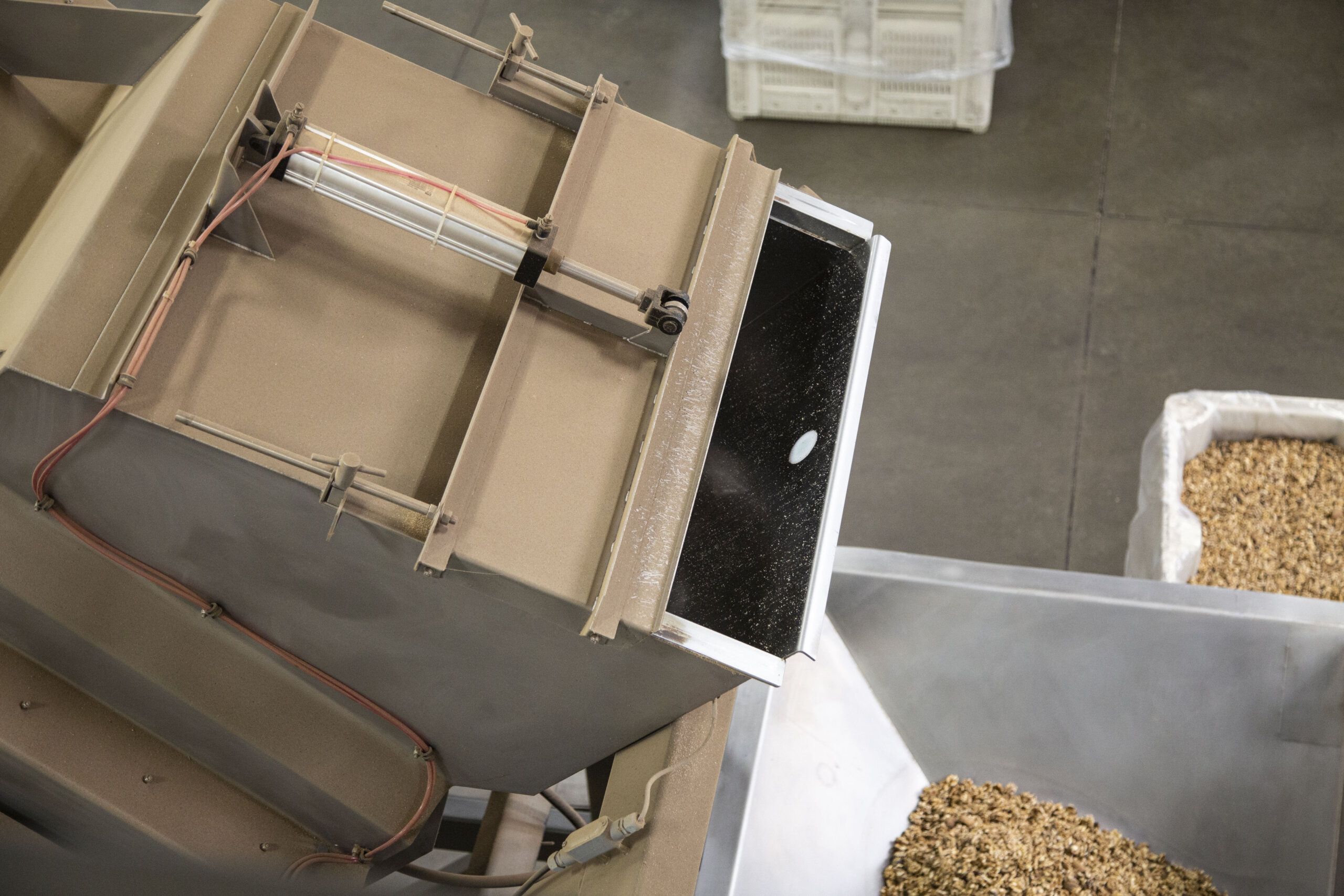
A PFI tote dumper handling walnuts

The purchase price is just the initial factor to consider. Installation, maintenance, and aftermarket parts also contribute to the total cost of ownership (TCO) over the machine’s lifetime.

Installation and Training: Vat dumper installation is a separate cost. However, free training at installation is included to ensure operators know how to use the equipment effectively and safely.

Maintenance and Operational Costs: Tote dumpers are generally low maintenance. However, components like hydraulic cylinders, valves, hoses, and fittings may need occasional replacement or rebuilding. These costs combined can add up to a few thousand dollars annually. The machines run on hydraulics and do not require much electricity. The overall energy consumption depends on the dumper’s run time and the number in use.

Replacement Hydraulic Cylinders: Hydraulic cylinders and their power units keep dumpers in operation. Cylinders require regular replacement to avoid a decline in performance. PFI offers 4-inch bore replacement hydraulic cylinders for our machines and other OEMs, as well as a rebuild service to extend the life of existing cylinders. 

AVERAGE PRICE RANGES 

Tote dumpers generally cost between $75,000 and $80,000, depending on the specific model and its configurations. Adding custom features or opting for a heavy-duty model with a 5:1 safety factor can increase the cost to $250,000. While these higher-end options are less common, they are available for operations that require enhanced safety or capacity.

MAXIMIZE YOUR TOTE DUMPER INVESTMENT 

Selecting the right tote dumper is crucial for efficient production, worker safety, and cost control. PFI offers expert solutions tailored to meet the unique needs of food processing operations. We use high-quality materials and proven design options that allow for decades of flawless operation.

Click below to explore our equipment and find the right fit for your operation.

View Our Tote Dumpers

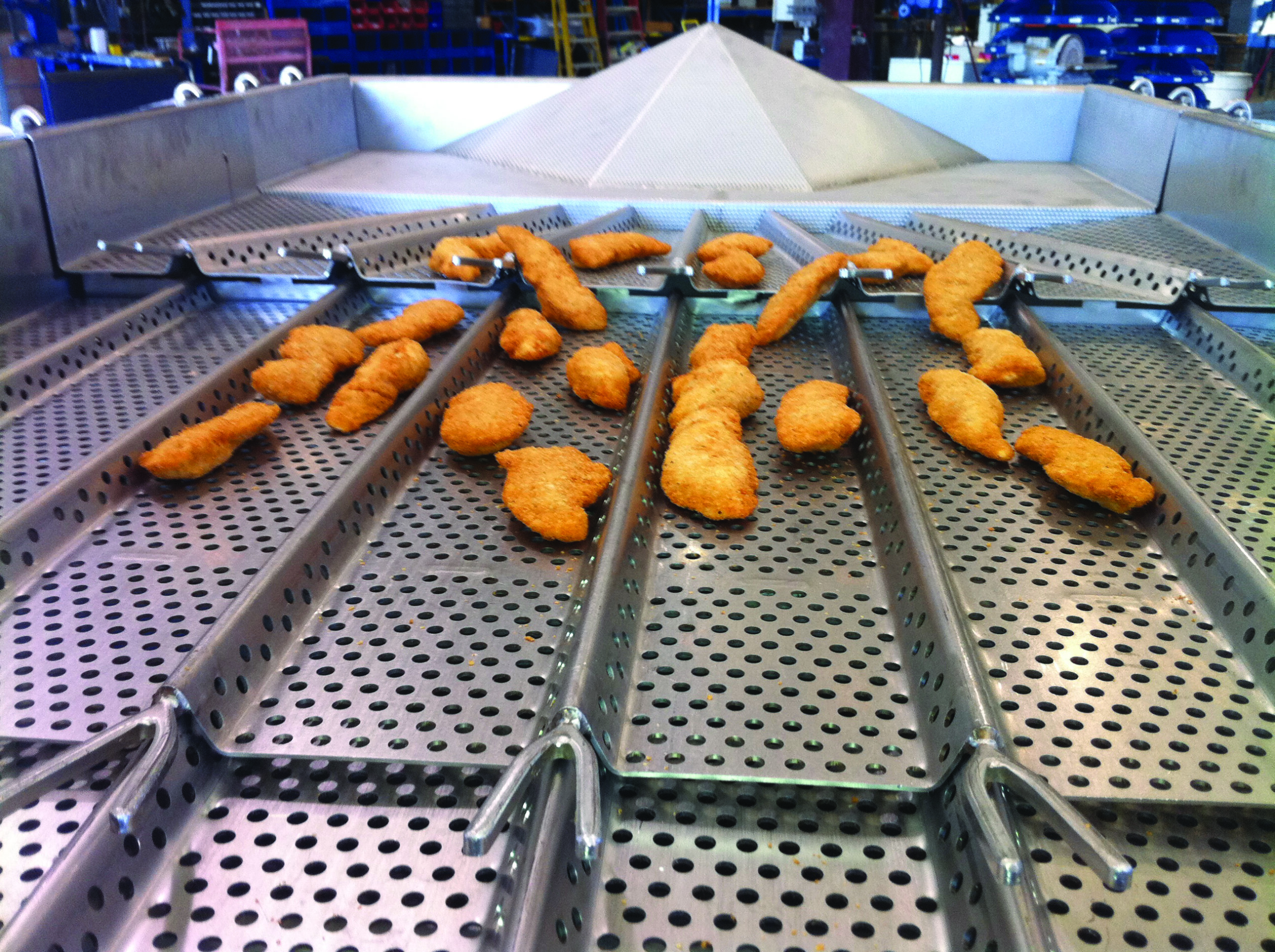
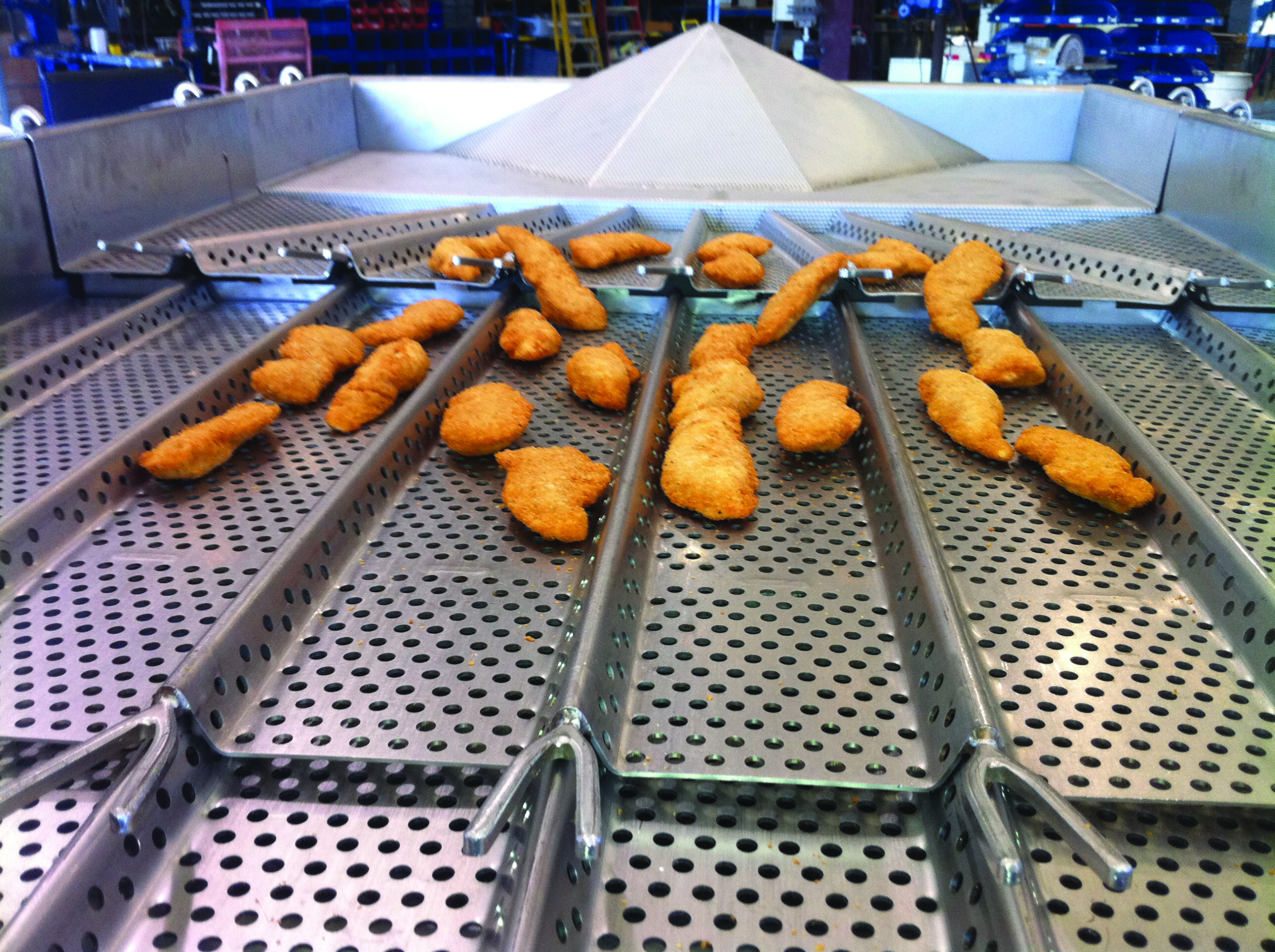
Chicken nuggets traveling down a PFI Laning Vibratory Conveyor.

How to Choose the Right Conveyor for Meat Processing

Meat processing facilities face several challenges in their daily operations. Ensuring food safety, maintaining high throughput, and adhering to regulatory standards can be daunting tasks. Processing different types of meat with unique handling and temperature requirements makes this even harder.

Finding a conveyor system that meets all these demands while being cost-effective and easy to maintain is challenging. Fortunately, there are solutions designed to address these specific needs. Read on to learn more about choosing the right meat-processing conveyor.

CRITICAL CONVEYOR SELECTION FACTORS

Conveyors are essential in maintaining food safety, sanitation, and product quality during the primary (butchery) and secondary (dicing/portioning) processing stages through packaging.

Choosing a meat processing conveyor involves careful consideration of several different challenges, including:

Hygiene Standards and Sanitation Requirements

Maintaining impeccable hygiene and sanitation standards is crucial for ensuring food safety and operational efficiency in meat processing facilities. Here’s how compliant conveyor equipment plays a pivotal role:

  • Stringent Standards Compliance: Food-grade conveyors must meet rigorous hygiene standards set by organizations like the American Meat Institute (AMI) and the USDA.
  • Regulatory Adherence: Facilities must comply with HACCP and FDA regulations to minimize contamination risks and uphold product quality.
  • Minimizing Cross-Contamination: Conveyor systems designed with accessibility and ease of cleaning in mind help mitigate cross-contamination risks during processing.
  • Operational Efficiency: Adhering to these regulations contributes to safer and more efficient operations, avoiding legal and financial repercussions that can harm a company’s reputation.

By prioritizing hygiene and sanitation in equipment selection, meat processing facilities can optimize efficiency, reduce costs, and ensure the highest standards of food safety.

Type of Meat and Application/Process

The type of meat plays a critical role in selecting the right conveyor system. For example, ground meat requires different handling than hot dogs or frozen chicken tenders. Raw meat must be kept at specific temperatures for safety reasons.

Product Integrity and Yield

It’s essential to maintain high throughput capacities while preserving product integrity. Conveyance systems must prioritize gentle handling and minimal product damage. And beyond regulatory requirements, food safety practices significantly influence product quality and yield and operational efficiency.

  • Extended Product Life: Effective sanitation practices prevent bacterial growth, extending product shelf life and reducing waste in processing.
  • Minimizing Waste: Conveyors can be equipped with return lines that send stray bits back to previous processes or fitted with catch pans and accessories designed to capture them.

Throughput Capacity: Capacity & Uptime

Meat moves quickly from farm to slaughter to processing—poultry moves even faster. Conveyors need to be durable and reliable to run consistently with little maintenance. This ensures total uptime in a fast-paced meat processing environment.

Full Solution vs. Individual Conveyor

It is important for meat processing facilities to choose between a complete conveyor system and individual conveyors. A complete system offers seamless integration and enhanced automation, improving overall efficiency. On the other hand, individual conveyors provide more customization options to meet specific processing requirements.

Look at the entire process. This includes conveying equipment and as much automation upstream and downstream as possible. Options or equipment can automate additional processes. Services to consider are:

  • Engineering layout design
  • Expert opinions and advice
  • FAT/testing availability
  • Installation
  • Millwright services

Utilizing OEM connections can create complete process systems through a one-stop shop. This approach is typically reserved for engineering firms and dealer/distributors who manage entire projects.

Material and Design Considerations

Selecting the right materials and designs for a conveyor system is crucial in meat processing. Conveyors must be made from materials resistant to corrosion and bacteria growth to ensure easy cleaning and sanitation. These materials must also withstand cleaning chemicals used in the process.

Designs must allow easy access for maintenance and cleaning. This reduces downtime and increases overall efficiency. Easy-to-clean equipment maintains hygiene standards and ensures smooth conveyor system operation.

TYPES OF PFI MEAT PROCESSING CONVEYORS

Sanitary conveyor design is critical for meat processing

PFI offers a range of conveyor systems designed specifically for meat processing applications. All of our conveyors meet exceptional sanitation standards and comply with industry regulations.

Belt Conveyors

Belt conveyors are popular in meat processing due to their versatility, long-distance conveying, and low initial cost.

Bulk Handling Equipment

Bulk handling on the raw and kitchen sides uses dumpers to move large volumes of meat efficiently. These dumpers provide smooth and safe transfers while maintaining productivity. Their flexible and easy-to-clean design meets high sanitation standards.

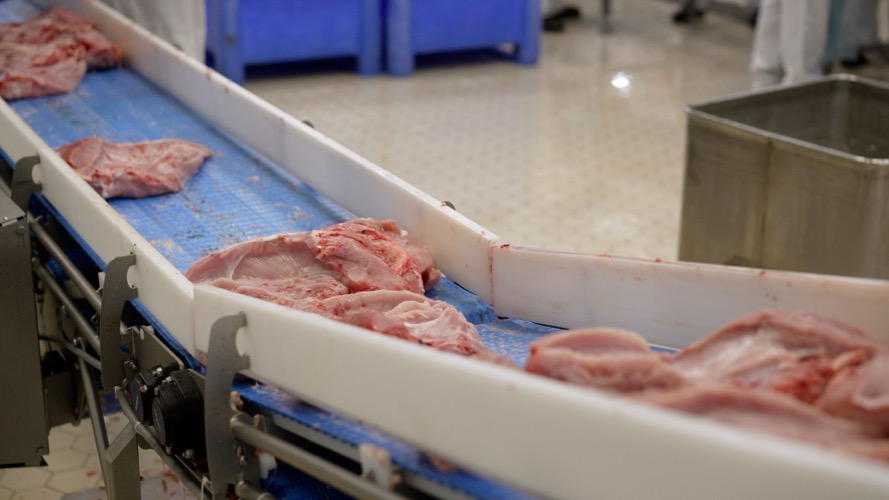
Dumpers and Screw Augers

Dumpers efficiently unload bulk product totes to quickly introduce product to the processing line. They handle products smoothly to minimize contamination. Screw augers precisely move bulk materials without spillage or loss, while maintaining product temperature and integrity.

Both equipment types improve workflow and uphold sanitation standards. Their design allows easy cleaning and flexibility, crucial for productivity and safety in processing environments.

Bucket Elevators

Bucket elevators are perfect for moving products to different heights. They are ideal for elevating products to tall processes (or equipment), including slicing/dicing/portioning/grinding and packaging.

Vibratory Conveyors

Vibratory conveyors provide gentle product handling and are typically used in frozen and processed meat lines feeding into packaging lines. They ensure efficient and sanitary product transfer.

These conveyors maintain product integrity and reduce the risk of cross-contamination. They offer precise control over product flow, making them ideal for applications requiring careful handling and distribution.

INNOVATIVE MEAT PROCESSING CONVEYOR SOLUTIONS

PFI engineers work on a meat processing conveyor solution.

Choosing a conveyor system that prioritizes safety, efficiency, and adherence to industry standards is essential. At PFI, we design custom conveyors that meet high sanitation standards and adhere to regulatory guidelines.

Click below to discover how PFI can optimize your meat processing operation with innovative conveyor solutions.

View Our Meat Processing Solutions

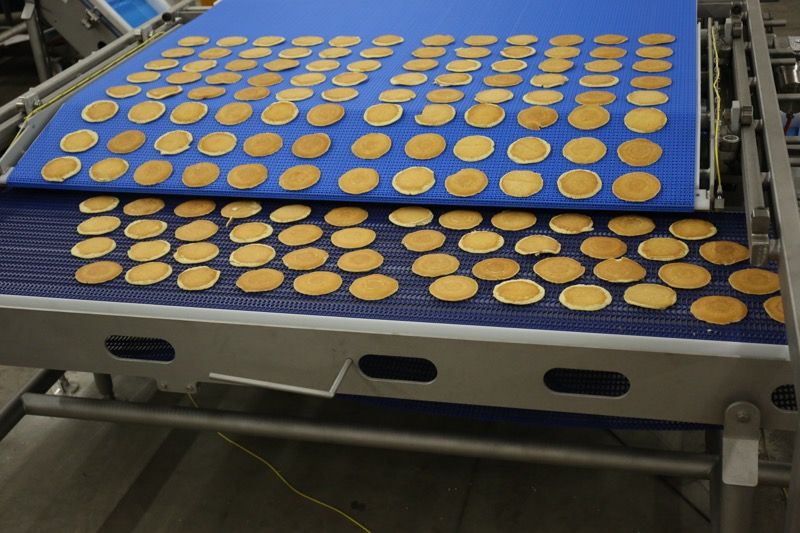
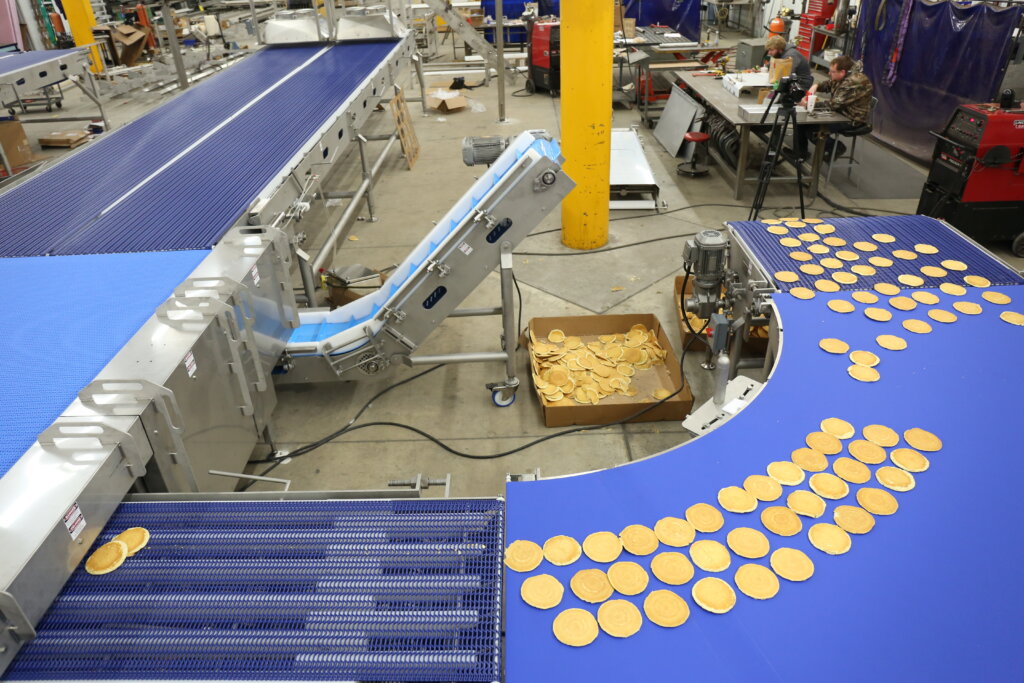
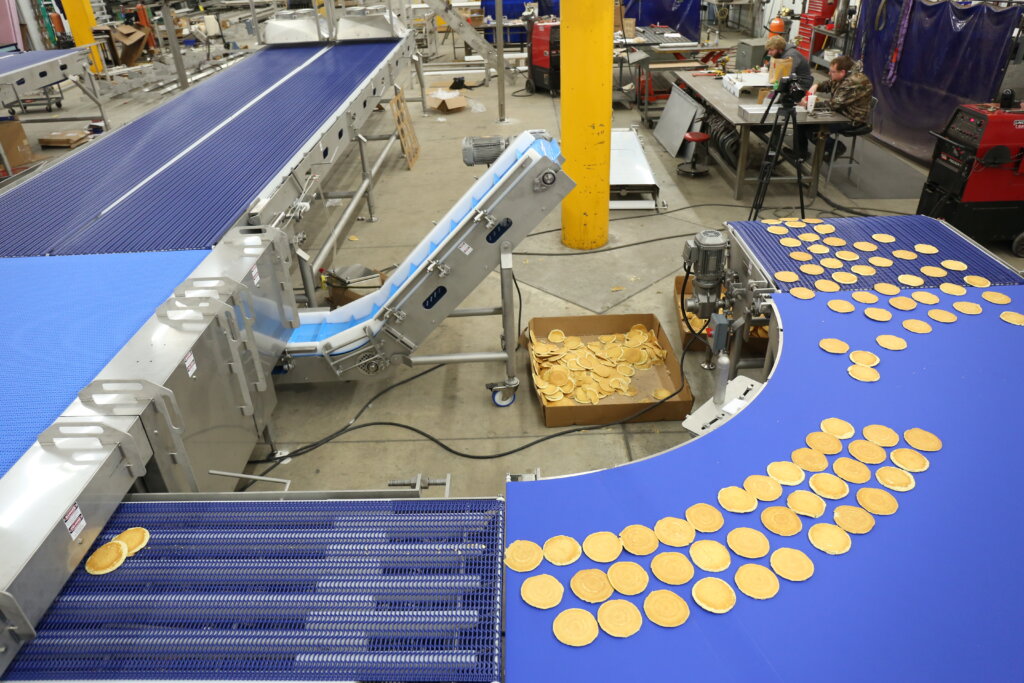
A PFI bakery conveyor transporting individual pancakes onto a secondary conveyor.

Choosing the Right Bakery Conveyor for Your Application

Bakeries are very fast-paced environments that process a variety of delicate products prone to damage. Soft bread, bars, and packaged cookies are particularly vulnerable when mishandled.

Conveyors are vital in minimizing damage, adapting to diverse product mixes, and maintaining efficient production flow. However, selecting the right one can be challenging due to numerous considerations.

Read on to learn how to choose the right bakery conveyor for your operations.

ESSENTIAL CRITERIA FOR SELECTING THE RIGHT CONVEYOR 

Evaluating conveyors requires a thorough assessment of several critical factors. These include:

Product Type & Mix

Bakery products change significantly throughout production – from ingredients to raw dough to a prepared product to a baked product to packaging. It’s essential to consider where a conveyor will be to determine the right solution, belt, and components.

Conveying systems need to adapt to not just one product, but many. Adjusting to different products and recipes is important for maintaining productivity and meeting changing consumer demands. A versatile conveyor system can help streamline production by allowing seamless transitions between various product types without compromising efficiency or quality.

Production Volume & Uptime

The dimensions of the conveyor will need to accommodate the flow of products based on your production capacity. For example, a wider belt may be necessary for higher volumes to ensure efficient processing and minimal downtime.

High performance and minimal downtime are essential for maintaining productivity in fast-paced bakery processing environments. Choosing a reliable conveyor system that consistently delivers on uptime can help ensure smooth operations and reduce the risk of costly disruptions to your production schedule.

Sanitation Requirements

A sanitary design avoids harmful bacteria and allergens such as nuts and gluten. Conveyors must have easy-to-clean surfaces and components to minimize contamination risks and ensure compliance with BEMA design standards.

It is imperative to opt for materials and designs that are food-safe, resistant to corrosion, and capable of preventing bacterial growth. These features allow for quick and thorough cleaning to maintain food safety.

Space Constraints

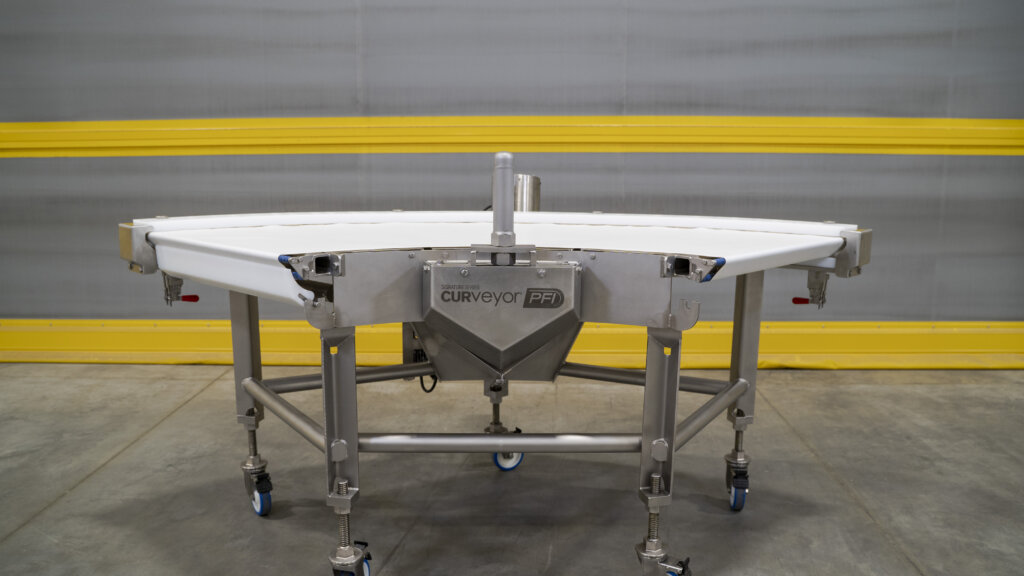
Bakeries with limited space may require elevating solutions or creative configurations to maximize footprint utilization. For instance, a Curveyor can help meet production needs in confined spaces by navigating around processing equipment, facility walls, columns, and doorways.

The Curveyor maximizes a food plant's footprint by facilitating product flow in the most challenging layouts.

Tight Transfers and Integrations

Proper connections between equipment prevent product damage during handling and maintain overall efficiency throughout the processing line. Conveyor system designs often incorporate retractors or other specialized components at various production stages for smooth transitions.

Maintenance

Regular maintenance checks ensure minimal downtime and efficient production. This includes inspecting belts for wear, lubricating moving parts as needed, and addressing any issues promptly before they escalate into more significant problems that could disrupt operations.

Ease of Cleaning

Easy-to-clean machines reduce downtime and contamination risks by allowing quick washdowns with minimal effort. Features such as positive drive belts, modular belt designs, and easily accessible components can all contribute to more efficient cleaning processes.

Choosing the right conveyor system is crucial for your bakery’s success. Careful consideration of these factors will help you find the right equipment that boosts efficiency, quality, and profits.

TYPES OF FOOD PROCESSING CONVEYORS 

At PFI, we offer a wide range of conveyor systems designed specifically for bakery processing applications. Each one offers unique benefits that make it suitable for different stages of production or particular product types:

Belt Conveyors

We equip our most common bakery conveyor solution with positive drive belts. These help with sanitation because they have fewer moving parts, smooth surfaces, and less horsepower. They also feature tight transfers to prevent damage during handling.

Our belt conveyors are ideal for many bakery processing applications, including:

  • Raw dough (buns, biscuits, bread): The Eleveyor and PURlift (commonly referred to as a “dough lift”) is a vertical lift conveyor with a positive drive that efficiently elevates raw dough 90 degrees to a chunker or divider. Positive-drive flat belts also transfer raw dough between equipment.

The Troughveyor excels at transferring large volumes across long distances with no loss. It features an open frame that allows for fast and thorough cleaning.

  • Bars/Packaged Bakery Items: The Curveyor uses specialized timing sequences to orient and alight bars, individual pancakes, and other bakery items for packaging purposes.

Modular belt conveyors have an open design that enhances airflow for faster product cooling. They efficiently manage items at different temperatures, including those needing to be cooled after par-baking.

Retractors and Curveyors help to ensure the alignment, positioning, and orientation of bakery items during the processing or packaging stages. This maintains product quality, prevents damage, and facilitates efficient production workflows.

An aerial view of an entire pancake processing line

Bucket and Incline Conveyors

Eleveyor and PURlift conveyors are very common in the baking industry. They can elevate dough or baked goods to mixers, dividers/chunkers, ovens, tall equipment, or a platform/mezzanine.

Vibratory Conveyors

They’re mainly used for sprinkling toppings over products or mixing/blending recipes of granola-type products. They provide gentle handling and precise control over the distribution process, ensuring consistent results every time.

All PFI conveyors meet exceptional sanitation standards. They comply with various regulations to maintain cleanliness and safety in bakery processing environments.

EVALUATING CONVEYOR OPTIONS AND MAKING THE RIGHT PURCHASE DECISION 

Choosing the right bakery conveyor system is not as easy as it may seem. Every bakery has unique needs and challenges that influence this decision. Understanding these specifics is crucial to finding the perfect fit.

Choosing a supplier that can provide customized solutions tailored to your unique requirements is essential. Look for an experienced partner with engineering expertise to design innovative solutions and a willingness to meet your exact needs.

Additionally, ensure you opt for features like belt scrapers to remove residue or belt lifts and Clean-in-Place (CIP) systems for cleaning. These enhancements improve sanitation efficiency and reduce downtime. Efficient cleaning processes are crucial for maintaining high production standards.

PFI’s experienced team works closely with clients to design and manufacture conveyors that meet their exact specifications. Our comprehensive approach ensures optimal conveyor selection for each unique bakery operation.

OPTIMIZE YOUR BAKERY PRODUCTION LINE WITH PFI CONVEYORS 

Downtime, product loss, and recalls are very expensive. Loss of reputation or contracts often leads to long-term market share erosion and a competitive disadvantage. This is why selecting the right bakery conveyor solutions is crucial to ensuring efficiency, product safety, and regulatory compliance.

PFI stands out as a leader in providing bakery conveyor solutions. Our expert team designs and manufactures conveyors that meet the highest standards of sanitation and efficiency.

Click below to explore our equipment and discover how we can help optimize your processing line.

View Our Bakery Solutions

Common Vibratory Conveyor Applications

Vibratory conveyors are essential tools in the food processing industry. They use controlled vibrations to gently move products along the production line–and so much more. 

Vibratory conveyors offer food processing applications beyond basic transportation. This adaptability allows for customization with various pans, accommodating different products and uses. These value-added features make vibratory conveyors valuable tools for optimizing multiple processes, boosting productivity, and maintaining stringent quality standards.

Screening

One key value-added application of vibratory conveyors is screening. Utilizing a perforated pan, these conveyors efficiently remove unwanted materials such as small or broken pieces, fines, and other debris that can impact product quality. 

The vibrations cause these unwanted particles to fall through the perforations, leaving behind a consistent, high-quality end product. This automated process improves the final product and reduces the need for manual sorting, leading to significant cost savings and improved overall efficiency in the production line.

Dewatering/Shaking

Vibratory conveyors (shakers) effectively remove excess water from wet products. As the product moves across a perforated screen, the vibrations drain water. This is especially useful for fruits and vegetables after washing, preparing them for packaging or further processing. This drying process prevents spoilage, maintains quality, and reduces contamination risk. It also improves efficiency in the following steps.

Laning

Aligning and orienting products is crucial for packaging or further processing in food operations. Vibratory conveyors with lanes guide products into specific positions, ensuring correct alignment for downstream operations. This setup increases efficiency and reduces the risk of misaligned products, jams, and damage. As a result, throughput improves, and waste decreases.

A vibratory food conveyor system made of stainless steel trays keeps chicken tenders sanitary.

Sorting/Grading

Vibratory conveyors with adjustable screens or specialized sorting mechanisms can automate the sorting and grading process. 

As products move across a series of perforated pans with different-sized holes, the vibrations cause them to fall through the appropriate holes, separating them based on size. This automated process ensures accurate and consistent product grading. It reduces the need for manual labor and minimizes the risk of human error.

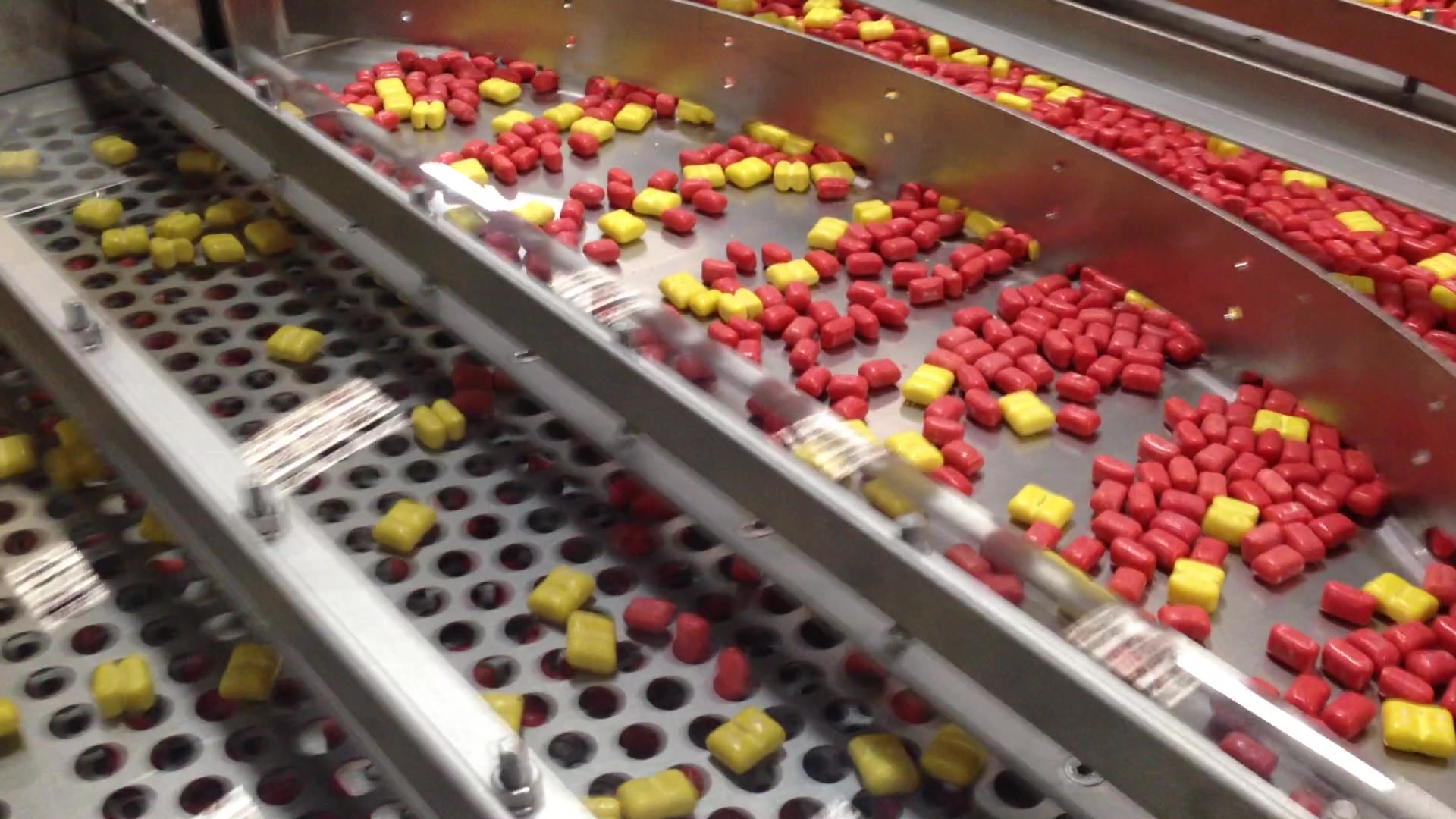
A food-grade conveyor sizes pieces of chewing gum.

Spreading

Maintaining a uniform distribution of products is crucial for many food processing operations, such as drying, coating, or inspection. Vibratory conveyors can be designed with spreading mechanisms that ensure an even layer of product across the entire width of the conveyor belt. This consistent flow improves throughput and reduces waste. It provides uniform processing, leading to better product quality and consistency.

Feeding

Vibratory conveyors are also used to control the product flow from bulk handling systems into downstream processes. The controlled vibration ensures a steady and consistent feed, preventing overfeeding or underfeeding that could disrupt production. 

Mixing & Blending

One application of vibratory feeders is mixing and blending. Precise metering of ingredients is essential for maintaining accurate recipe formulations and consistent product quality.

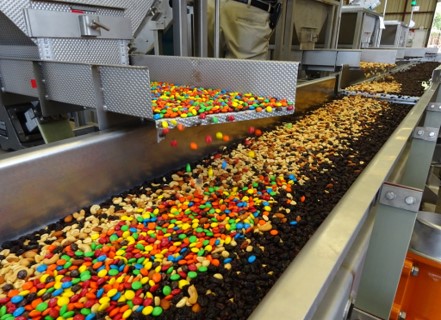
Candy is mixed, blended, and sorted on a vibratory conveyor

WHY VIBRATORY CONVEYORS ARE THE IDEAL SOLUTION 

Vibratory conveyors offer high throughput and rapid movement of large product volumes, which increases production levels. Their low maintenance requirements also make them ideal for minimizing downtime and reducing the total cost of ownership.

Vibratory conveyors are particularly well-suited for additional food processing applications due to several factors. 

Increased Performance Without Additional Equipment

Customizable pans on vibratory conveyors and feeders can perform various applications, eliminating the need for multiple machines. This value-added approach allows for the simultaneous conveyance and manipulation of products while improving overall efficiency. Food processors enjoy reduced capital budget, line footprint, and operations and maintenance.

Sanitation & Food Safety

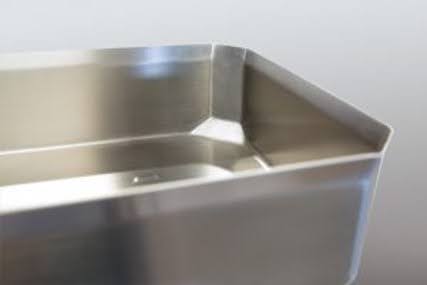
Vibratory conveyor pan angles eliminate contamination areas.Maintaining hygiene and product integrity is paramount in food processing. Their sanitary design meets these stringent requirements. One-piece, smooth pans with angled side edges eliminate areas where a product can build up or become contaminated.

Vibratory conveyors are designed with sanitation in mind. Compared to belt conveyors, the minimal number of moving parts reduces potential contamination points. Their open-access frames also allow for quick and easy cleaning, maintenance, and swab testing. This ensures that production can resume promptly after these procedures.

Gentle Handling Equals Optimal Product Integrity 

The gentle vibration of these conveyors helps maintain product integrity. The precise vibration frequency is carefully calibrated to move products without causing damage (e.g., breakage or seasoning loss). This gentle handling is crucial for preserving the quality and appearance of delicate or fragile products.

The continuous movement prevents slippery products like meat from remaining stationary for extended periods. This helps avoid unsafe temperature zones caused by friction or production stoppages.

SEAMLESS INTEGRATION INTO FOOD PROCESSING LINES 

Due to their adaptable design, integrating vibratory conveyors into existing food processing lines is straightforward. Depending on the specific application, they can be easily installed at various points in the line. 

Whether transporting ingredients between processing stages, sorting products by size, or dewatering washed vegetables, vibratory conveyors can be customized to fit the unique needs of each operation. They can handle a wide range of food products, from dry snacks and pet food to soft bakery items and meats, making them a valuable asset for any food processing facility.

PFI: YOUR PARTNER IN VIBRATORY CONVEYOR SOLUTIONS 

PFI is your trusted expert in vibratory conveying solutions for the food processing industry. We design and build custom sanitary systems that gently handle your products, clean easily, and offer long-lasting value. Popular models include the versatile VFII, the precise EDF feeder, and the efficient MAGNEflex.

Food safety is our top priority. We use stainless steel and minimal moving parts, reducing maintenance needs and improving hygiene. Our systems ensure optimal product handling to minimize product damage regardless of the food type. We offer flexible configurations and work closely with customers to integrate our equipment into existing processes.

PFI boasts decades of experience and a commitment to quality. We will help you find the perfect vibratory solution to optimize your production line and achieve energy efficiency. Our expertise and commitment to quality ensure a reliable and efficient system that enhances your production.

Click below to explore how our vibratory conveyor solutions can enhance your food processing line.

View Our Vibratory Conveyors

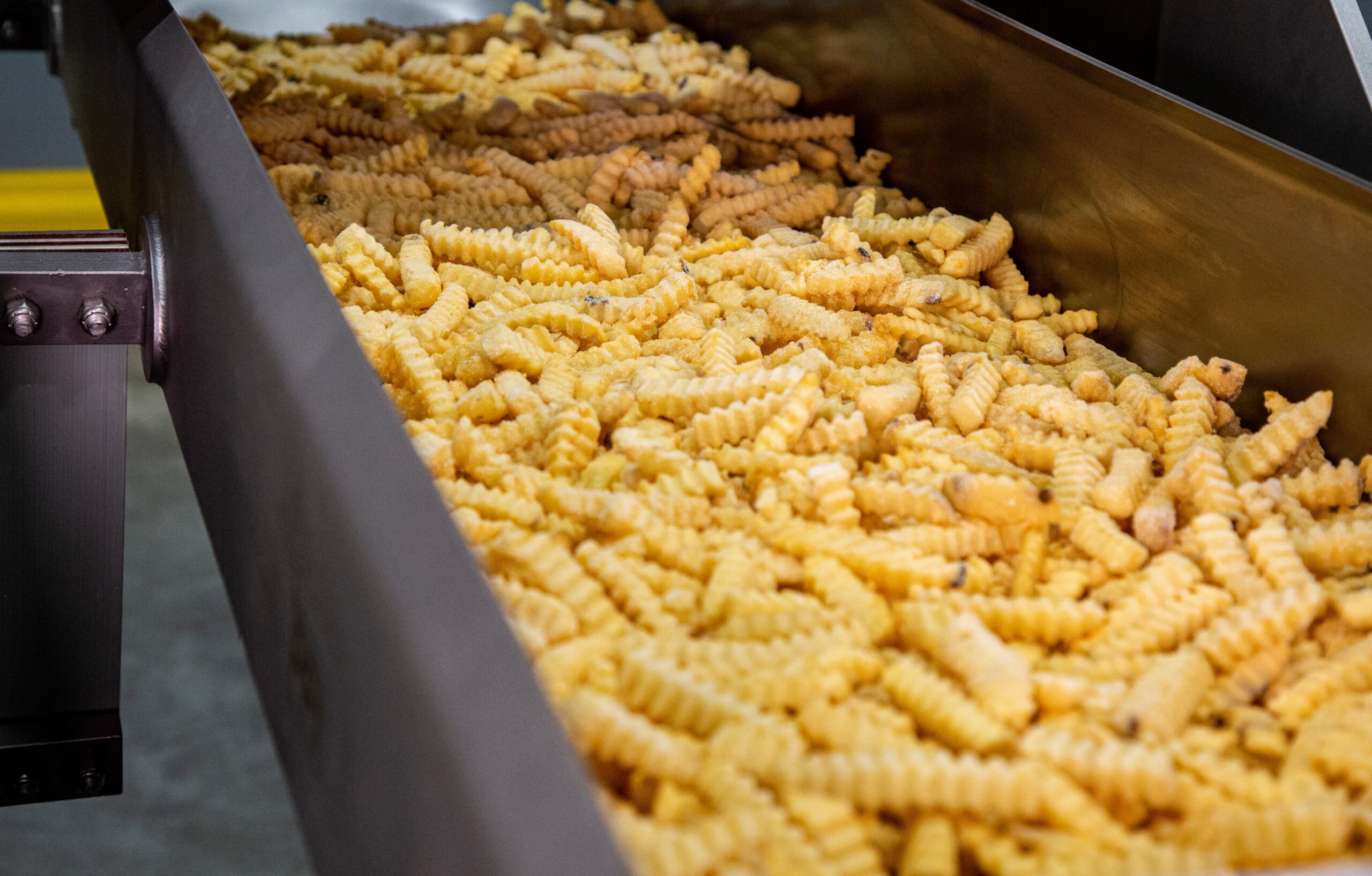
A PFI vibratory conveyor grading shoestring fries

How Much Does a Vibratory Conveyor Cost?

Vibratory conveyors are essential machines in the food processing industry. These powerful workhorses move, sort, grade, and handle various products effortlessly. However, as with any large equipment purchase, it’s vital to understand the cost implications.

Several important factors influence the overall price of a vibratory conveyor. Understanding them will help you budget and make a more informed decision. Read on to learn more about vibratory conveyor costs and what drives pricing variations.

FACTORS IMPACTING VIBRATORY CONVEYOR COST 

Vibratory conveyors come in many variations to suit specific applications in the food industry. The type and complexity of the solution you need will greatly influence the overall cost.

Drive Type

Electromagnetic and mechanical vibratory conveyors use different operating mechanisms, directly affecting their cost. Electromagnetic conveyors often have a higher initial price tag but may be more energy-efficient over time.

Solution Type

A simple conveyor setup has a different price point from a more complex vibratory one. These complexities drive the most price increases due to the additional components and design time. The solution choice hinges on your project scope and the tasks you need the system to accomplish.

Value-Added Applications

Vibratory conveyors can perform various functions beyond basic conveying, but each application comes with its own cost implications:

  • Feeding: While basic feeding typically doesn’t require significant design changes, custom controls or hoppers may be necessary to ensure a consistent and metered flow.
  • Screening: Specialized screens with various mesh sizes and configurations are integrated into the conveyor bed to separate particles by size or remove foreign objects. A separate takeaway conveyor is often included to remove and collect oversized or unwanted materials (“takeaway”).
  • Dewatering: Removing excess moisture or liquid requires specially designed pans or decks with drainage holes or slots. A collection pan or trough beneath the conveyor may be necessary to catch and redirect the drained liquid.
  • Laning: Dividers and guide rails are added to the pan to create multiple product lanes on a single conveyor. More complex configurations may involve multiple vertically tiered conveyors, each with its own motor and controls.
  • Grading: Specialized pans with varying slopes, multiple tiers, or a combination of both are used to sort products by size or quality. This differs from laning, which typically uses a single pan with dividers.
  • Spreading: Even product distribution across the conveyor often requires custom-designed pans or strategic placement of additional vibration motors.

A PFI laning vibratory conveyor moving processed chicken nuggets.

System Complexity & Integrations

The total cost of your vibratory conveyor system depends on its overall complexity. A system with multiple conveyors and supporting equipment like platforms or stairs will naturally be more expensive than a single, standalone conveyor.

Integrating your vibratory conveyor with existing equipment or other processing lines adds another layer of complexity and cost. For example, transitioning from a wide conveyor to a narrow one, merging multiple lines into one, or elevating a product from floor to a platform requires additional components and engineering. 

Customizations

Any modifications or integrations beyond a standard conveyor setup will alter the price. Common customizations might include changes in shape or size or the addition of specialized discharge chutes.

Size

The physical size of the conveyor—length, width, depth, and the overall number of conveyors needed—all impact costs. A longer or wider conveyor or a multi-conveyor system will naturally be more expensive.

Electrical Controls

Simple controls are less expensive than centralized systems. However, centralized controls for multi-conveyor setups can improve safety, boost efficiency, and reduce downtime. These improvements will ultimately impact your bottom line.

Sanitary Design

RTE (ready-to-eat) and USDA-compliant sanitary conveyors follow strict material and construction standards. Due to the use of stainless steel and other specialized design elements, they are more expensive to manufacture. However, sanitary conveyors are vital in preventing costly product recalls.

Quality/Durability

Investing in high-quality materials and construction pays dividends in the long run. A well-built conveyor will have fewer maintenance problems and last much longer, resulting in a better return on investment over time.

Expertise and Support

Choosing a vibratory conveyor supplier with extensive experience in the food processing industry is crucial. A knowledgeable manufacturer like PFI understands the unique challenges and regulatory requirements of food production. 

We can guide you in selecting the right solution, ensuring it meets all sanitary design standards and integrates seamlessly with your existing equipment. Moreover, PFI provides comprehensive support, from initial design and engineering to installation, training, and ongoing maintenance, safeguarding your investment and maximizing the long-term value of your vibratory conveyor system.

ADDITIONAL COST CONSIDERATIONS 

Remember the costs beyond buying the conveyor. Installation, training, and ongoing maintenance can all add up over time.

Installation

Installation of vibratory conveyors is typically a separate service from the cost of the machine itself. Factors like the project complexity, location, whether structural changes are needed, and the total installation time will all impact the final installation cost.

Training

Vibratory conveyors are designed for easy operation. PFI offers basic training resources (e.g., manuals and videos) at no extra cost. We train staff at installation and can host additional training for a fee. 

Maintenance

Vibratory conveyors are known for their low maintenance requirements. Their minimal moving parts translate into lower operational costs over their lifetime. However, routine upkeep is crucial in maximizing their lifespan and performance. This typically involves replacing vibratory springs once or twice a year and properly tuning the motors

The relatively low cost of these replacement parts contributes to the overall cost-effectiveness of vibratory conveyors. 

Operational Expenses (Energy Consumption)

Properly tuned mechanical vibratory conveyors are remarkably energy-efficient. Due to their design, electromagnetic conveyors can offer even lower energy consumption. This energy efficiency can significantly reduce operating costs over time.

PRICE ESTIMATES

The price of a vibratory conveyor depends heavily on size and customization. For a more accurate idea, getting a quote directly from a manufacturer is best.

Base Models

The price of a base model vibratory conveyor varies depending on its model, size, and built-in features. For example, smaller conveyors can run anywhere from $25,000 to $100,000+.

Customized Models

Vibratory conveyors with extensive customizations or complex system requirements are harder to price without detailed specifications. The wide range of possible options, sizes, and features make fixed estimates challenging.

LIFETIME VALUE AND COST

Regular maintenance is crucial to get the most out of your vibratory conveyor. It extends the lifespan and optimizes performance. Keeping your conveyor in good working order can minimize downtime and increase productivity.

Due to their limited moving parts and longer lifespan, vibratory conveyors have a lower lifetime cost than belt conveyors. This advantage enables them to operate with reduced maintenance requirements and increased uptime. At PFI, we build our conveyors with high-quality materials to deliver reliable performance and durability.

A well-designed conveyor tailored to your specific needs can also reduce the total cost of ownership and maximize return on investment. Additionally, it offers impressive energy efficiency, which reduces operating expenses over time. A customized conveyor solution allows you to streamline your operations and stay ahead of the competition.

GET THE RIGHT VIBRATORY CONVEYOR SOLUTION WITH PFI 

The cost of a vibratory conveyor system depends on various factors. That’s why partnering with PFI is crucial. Our team of experts will guide you in selecting the ideal vibratory conveyor for your needs. We’ll ensure you get the best value for your investment.

Click below to learn more about our vibratory conveyors and the value they’ll add to your production line.

View Our Vibratory Conveyors

Choosing the Right Vibratory Conveyor for Food Processing

Running a food processing operation has inherent challenges that can disrupt efficiency and profit margins. It can sometimes feel overwhelming, from meeting strict regulations to maintaining sanitation standards. 

One of the most common hurdles is ensuring your products’ smooth and efficient flow through the various operational stages. A high-quality conveying system can alleviate this pressure, but finding the right fit for your unique needs can be daunting.

This is where vibratory conveyors come in. These versatile and robust conveyors are an asset in many food processing facilities worldwide. Read on to learn more about selecting a vibratory conveyor for food processing.

WHY USE VIBRATORY CONVEYORS FOR FOOD PROCESSING?

Vibratory conveyors offer several advantages for food processing. They handle the product efficiently and gently, protecting its integrity. These conveyors are also designed for easy cleaning, essential for meeting sanitation standards and minimizing downtime.

Other conveying solutions exist, such as belt or horizontal motion conveyors. Belt conveyors can be less expensive initially. However, due to their moving parts and cleaning challenges, they often require more maintenance in the long run. 

Horizontal motion conveyors are ideal for extremely gentle handling. Yet, they are limited to flat lines and can be slightly more expensive.

Vibratory conveyors strike a balance between efficiency and gentle handling. Their versatility makes them adaptable to various product types and processing stages. Their low-maintenance design also helps reduce operational costs over time, making them a compelling choice for many food processing operations.

CHOOSING THE RIGHT VIBRATORY CONVEYOR: FACTORS TO CONSIDER 

When evaluating vibratory conveyors, these considerations should be top of mind:

Food Application: This is the most important factor. Consider the product’s size, drag (weight and stickiness), durability/fragility, whether it’s coated/seasoned, and volume. These characteristics will directly inform the best conveyor model, stroke, width, and length for your needs.

Function/Application: Vibratory conveyors can not only move products, but can also perform other value-added functions such as:

  • Feeding (bringing the product from one step to the next at a metered rate)
  • Screening (separating by size using a pan with holes)
  • Dewatering (removing water from the product)
  • Laning (aligning product in lanes)
  • Sorting/Grading (separating into grades/sizes)
  • Spreading (aligning across the pan’s width)

Drive Type:

  • Electromagnetic: Variable speed, short lift, high frequency. Best for spreading, screening out fines, and handling lightweight products.
  • Mechanical: Fixed speed, long amplitude, low frequency. Excels with heavier, stickier products.

Throughput Requirements: Understanding your throughput needs will guide you in determining the appropriate conveyor size, ensuring it can handle the necessary product volumes. You may also want to consider how many conveyors will be needed for your application and footprint; you may need a system of several products. 

Sanitation Requirements: Hygiene is paramount in the food processing industry. Choosing a vibratory conveyor with sanitary design features will ensure easy cleaning and compliance with necessary standards. Certain applications, such as those in the meat or dairy industries, may have even stricter sanitation requirements.

Regulatory Requirements: Different food processing applications may need to meet specific regulatory standards. All vibratory conveyors offer a strong baseline in sanitation due to their wipedown/washdown pans, lack of moving parts, and accessible design. 

However, applications with stricter sanitation requirements, such as those governed by the USDA, may require adjustments to the standard designs for optimal compliance. Be sure to select a vibratory conveyor model that explicitly aligns with the regulations governing your particular operation.

Process/Location: This may affect the controls needed for speed adjustments or stopping/starting and impact the required sanitary design level. Consider how the conveyor will integrate with other equipment and whether your location requires special features or discharge designs. 

Quality of Design: Vibratory conveyors should be high-performing and low-maintenance. Design quality is crucial for this.

Materials:  Stainless steel is standard for food processing. Opt for heavy-duty stainless steel when working with particularly heavy products, like potatoes.

Proper Spring Location and Angles: These ensure correct throw (pitch and distance). PFI uses a fixturing system to guarantee accuracy in all our conveyors.

Accessibility & Limited Moving Parts:  These features are important for easy maintenance and cleaning.

Technical Support: The availability of training materials, installation, and long-term maintenance support from the manufacturer is essential.

TYPES OF VIBRATORY CONVEYORS FOR FOOD PROCESSING

PFI's vibratory conveyor mixes and blends trail mix

PFI prioritizes these considerations throughout their design process. This focus has resulted in three distinct, highly efficient vibratory conveyor lines, each tailored to meet your needs.

Versatile Mechanical Drive Vibratory Conveyor – VibraFlex II (VFII)

PFI’s VibraFlex II (VFII) vibratory conveyor offers the ultimate flexibility and value for food processors with its various applications throughout the entire processing line, efficient operation, and sanitary and maintenance-friendly design.

  • Versatility: It can handle a wide variety of food products, performs various tasks beyond simple conveying, and comes in different sizes to fit your space. You can further customize it with features like discharge points, gates, and mounting options for optimal integration into your existing line.
  • Optimized for Durability and Easy Sanitation:  The VFII prioritizes both long-lasting performance and effortless sanitation. Its base and mechanical drive eliminate moving parts or lubrication, ensures lower energy usage and noise, and requires virtually no maintenance.
  • Common Applications: screen, lane, grade, feed, spread or dewater/shake product between the key processes on the processing line across a wide range of temperatures.

Efficient Electromag Vibratory Conveyor – MAGNEflex

For applications requiring precise flow control, electromagnetic vibratory solutions are required.

The MAGNEflex offers efficiency and flexibility for food processors with weight and speed control, efficient operation, and sanitary and maintenance-friendly design. 

  • Control & Accuracy – the electromagnetic drive system delivers accurate product flow control with variable speed/stroke feedback loops and instant on/off.
  • Durability & Performance – the design features electro-mag coils with no moving parts and quieter operation. You can easily wipe down or washdown the stainless steel pans for quick cleaning.
  • Common Applications: Feed, spread, and lane raw potatoes, meat, or other sticky/abrasive products

Uniform Electromagnetic Feeder – EDF

The EDF Feeder offers exceptional flexibility and precision, making it ideal for integrating into various food processing systems. The EDF’s compact design maximizes valuable floor space,  and its electromagnetic drive ensures quiet, low-maintenance operation. Built with sanitation in mind, the easy-to-clean stainless steel pan simplifies your workflow.

  • Adaptability: The EDF feeder can be utilized as a standalone unit or seamlessly integrated with the Hopper Feeder or Mix/Blend system, depending on your production needs. It comes in a range of sizes and mounting options, ensuring compatibility with existing setups. 
  • Control: Traditional feeding methods can often lead to over or underfeeding, resulting in product waste and inefficiencies. The EDF feeder delivers precise control over material flow. Adjustable settings allow for meticulous metering of ingredients, minimizing product waste and maximizing yield.
  • Common Applications: Feed, meter, screen, and lane a variety of food products from Mix/Blend Systems and Hopper Feeders to mixers/blenders, packaging, and other processing steps.

EVALUATING AND CHOOSING THE RIGHT VIBRATORY CONVEYOR

PFI's vibratory conveyor distribution system is designed for high-performance food processing operations.

To select the perfect vibratory conveyor model for your facility, consider these steps:

Define Your Needs: Carefully consider the previously outlined factors: throughput, sanitation, regulations, and, most importantly, the unique characteristics of the food you process.

Seek Expert Guidance: Collaborate with a reputable vibratory conveyor manufacturer like PFI. Our skilled team understands the nuances of food processing and can recommend the perfect solution for your operation.  Leverage their expertise to help you evaluate different models and ensure the chosen conveyor integrates seamlessly with your existing equipment.

Request Demonstrations: If possible, request demonstrations to see vibratory conveyors in action with your specific product, providing valuable first-hand insights.

Compare Beyond Initial Costs: While the initial price is important, don’t overlook other factors. Consider aspects like lead time (especially in today’s market), ease of integration, maintenance requirements, and the conveyor’s potential impact on your overall efficiency.

PFI: YOUR PARTNER IN VIBRATORY CONVEYOR SOLUTIONS 

At PFI, we understand the complexities and challenges of the food processing industry. Our expert team is ready to help you determine the optimal vibratory conveying solution to maximize your facility’s efficiency while ensuring food safety and upholding rigorous industry standards.  

Let’s work together to find the perfect vibratory conveyor solution for your specific needs. Explore our solutions below and discover how they can transform your production efficiency.

View Our Vibratory Conveyors

Sanitary conveying, delivered.™

Contact us

300 Kofab Drive
Algona, IA 50511


515.295.7265


sales@pficonveyors.com

© 2024 PFI. ALL RIGHTS RESERVED. | Privacy Policy | Terms and Conditions